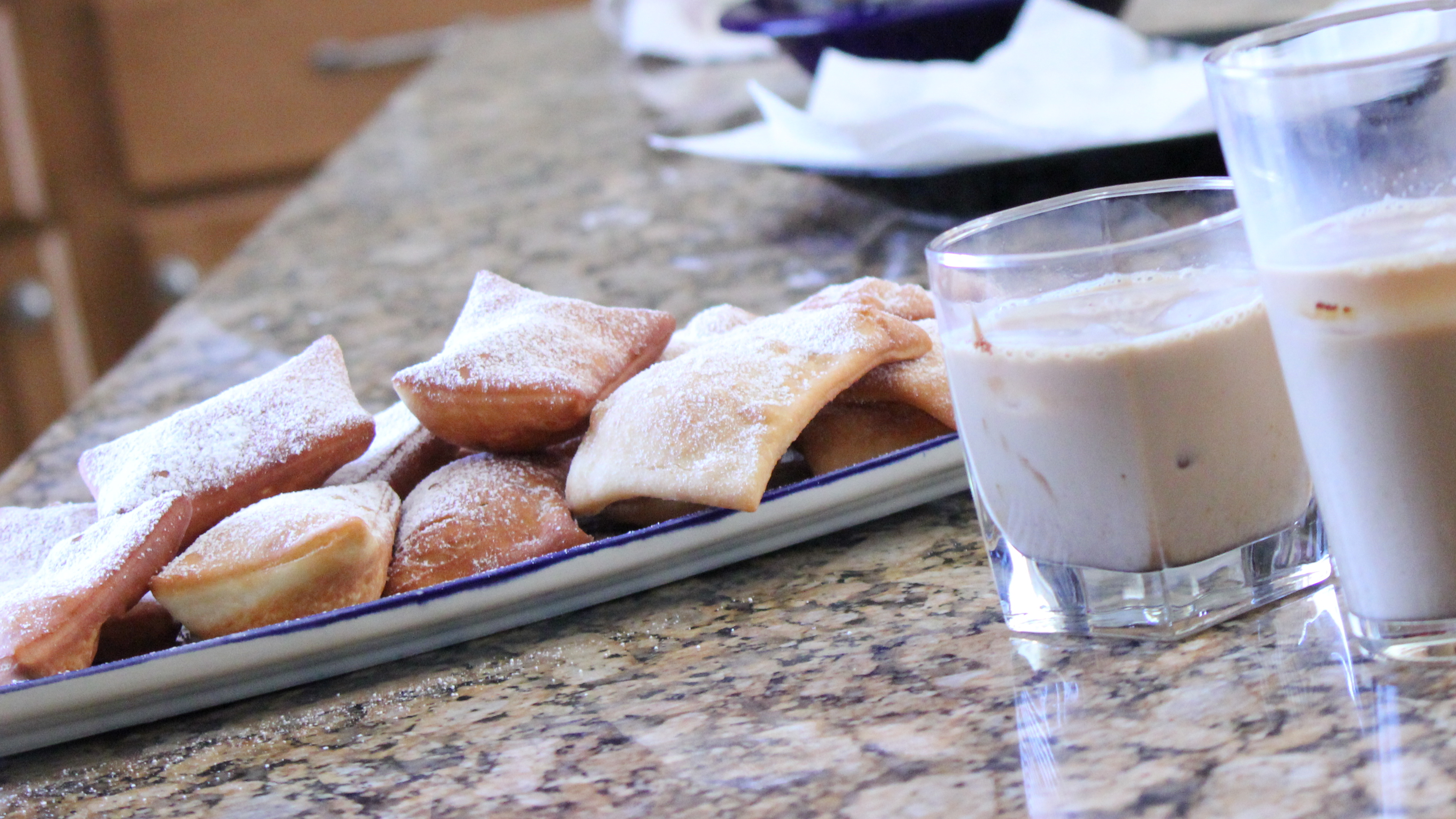
Donut Paradise

What happens when I let the kids talk me into watching the Travel Channel’s Donut Paradise with them?

A lesson on making sopaipillas ensues.
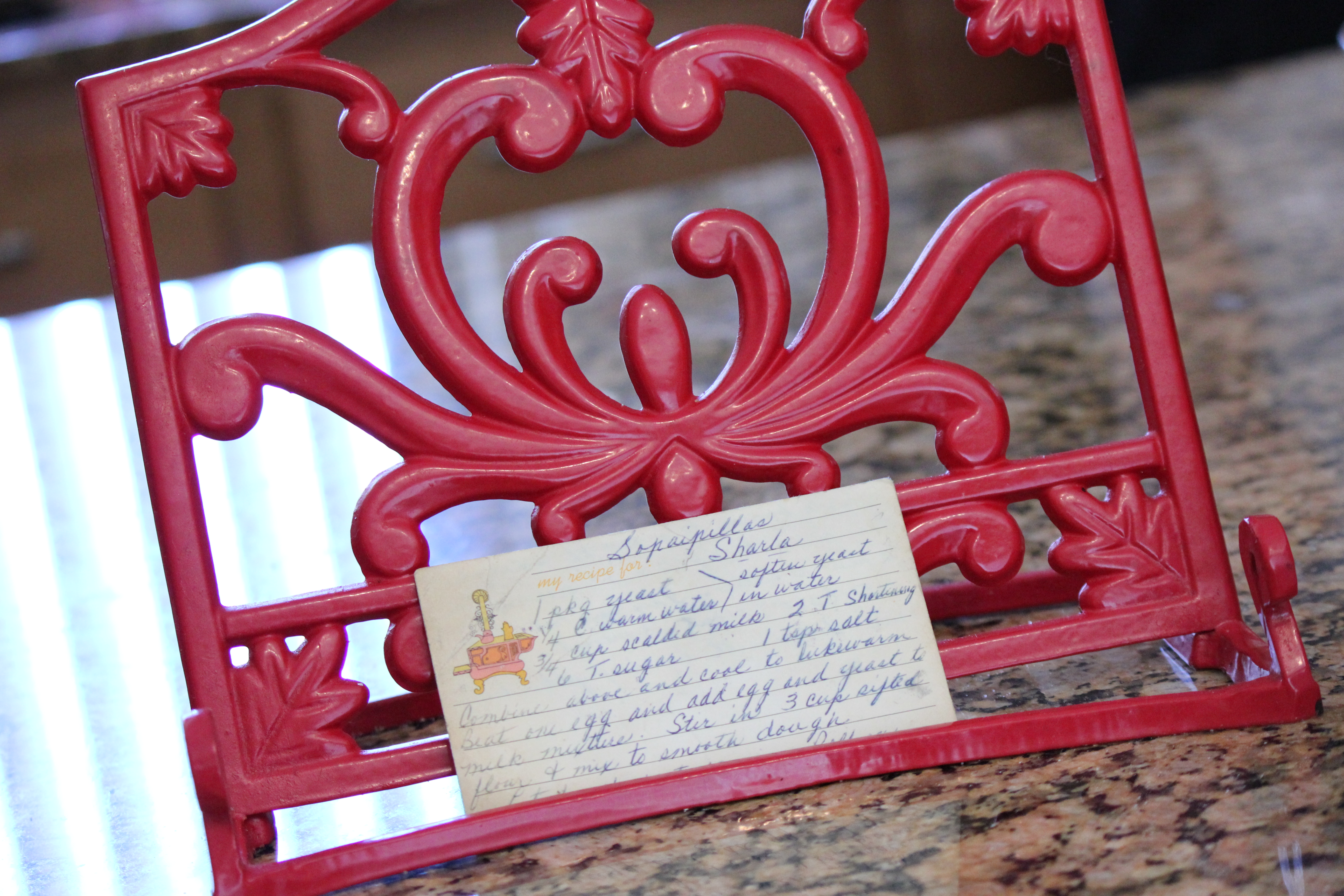
My sister’s recipe in my mother’s lovely handwriting.

The recipe is very similar to Paula Deen’s recipe for French Quarter Beignets.

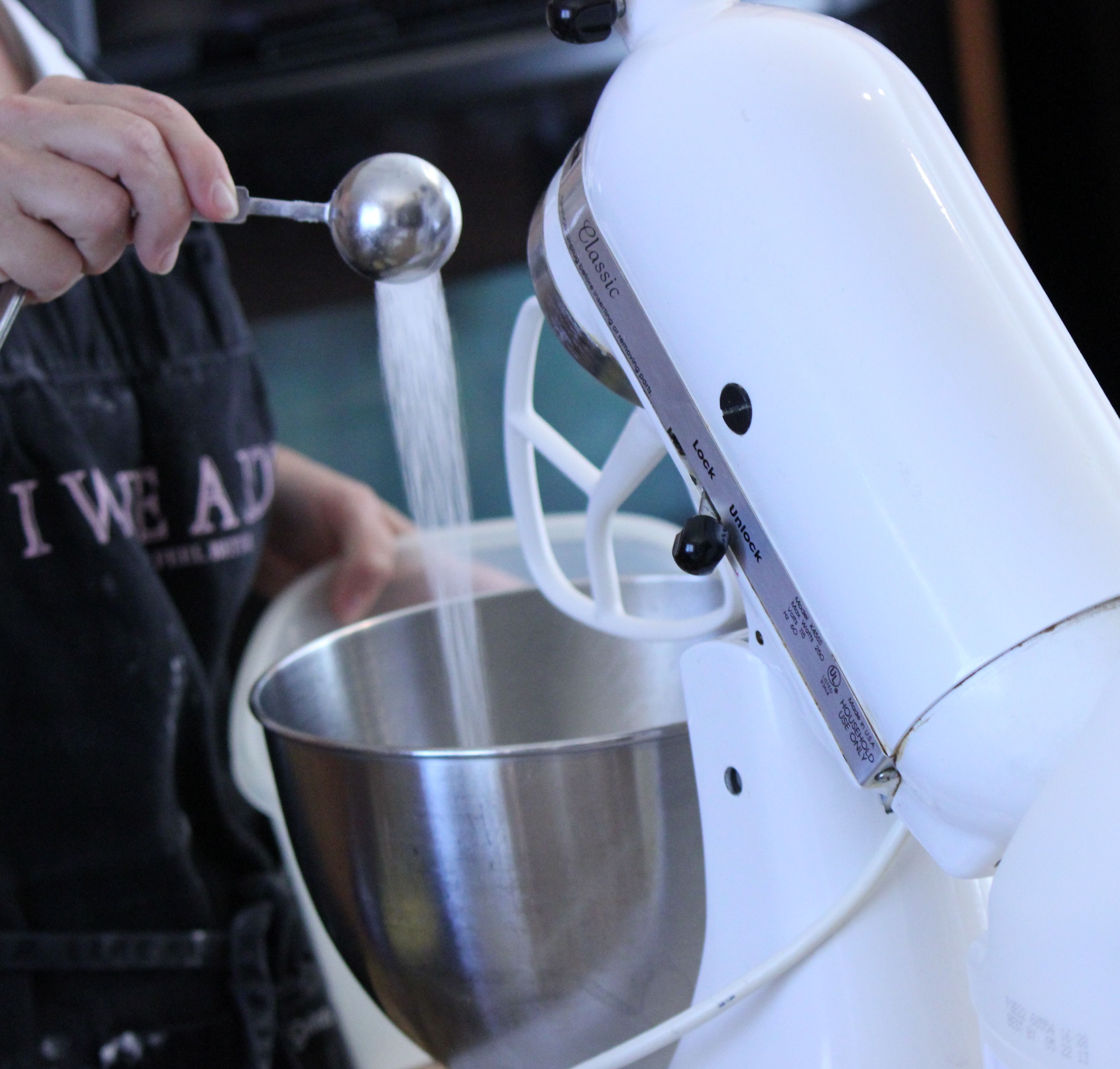
Sugar for sweetness!
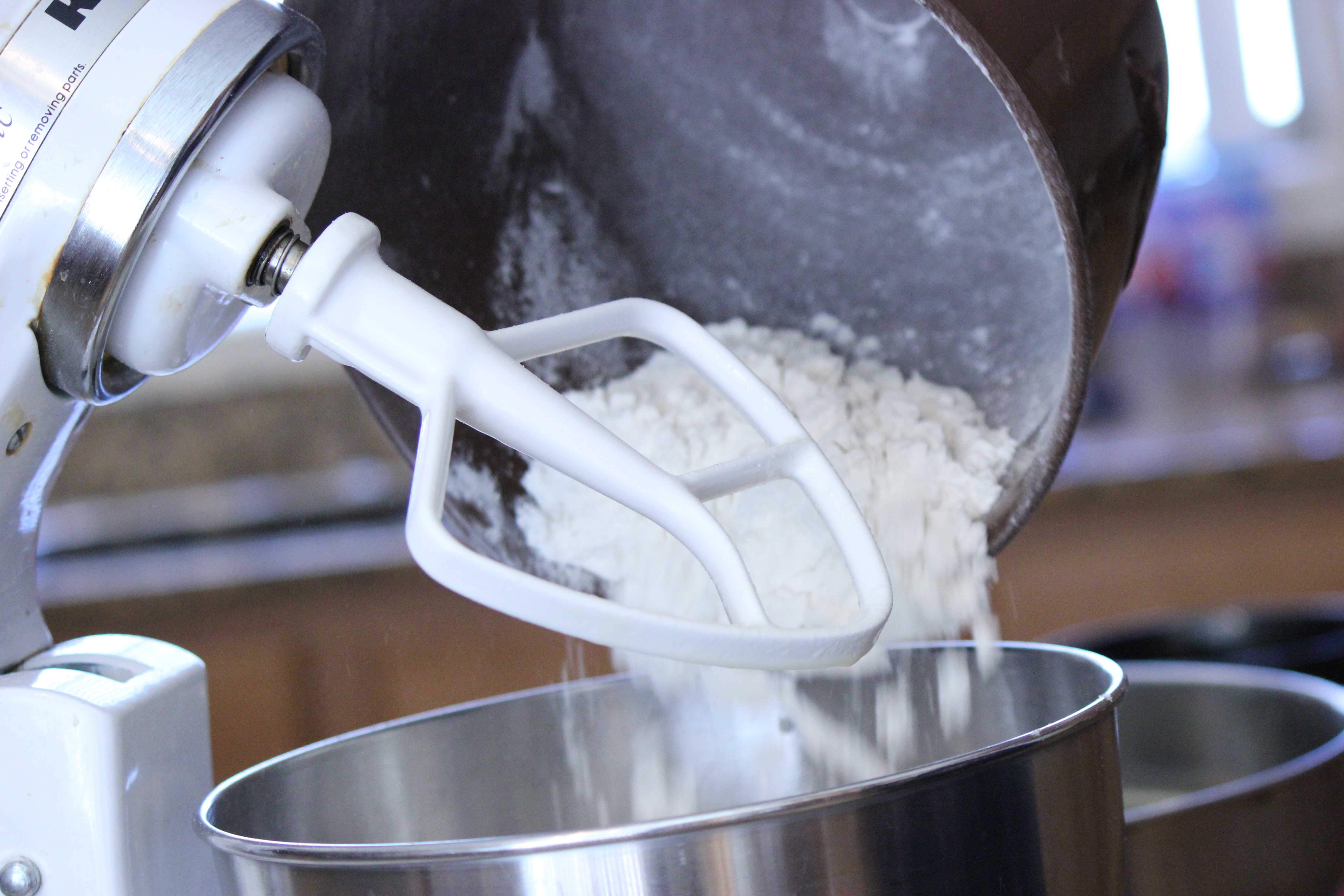
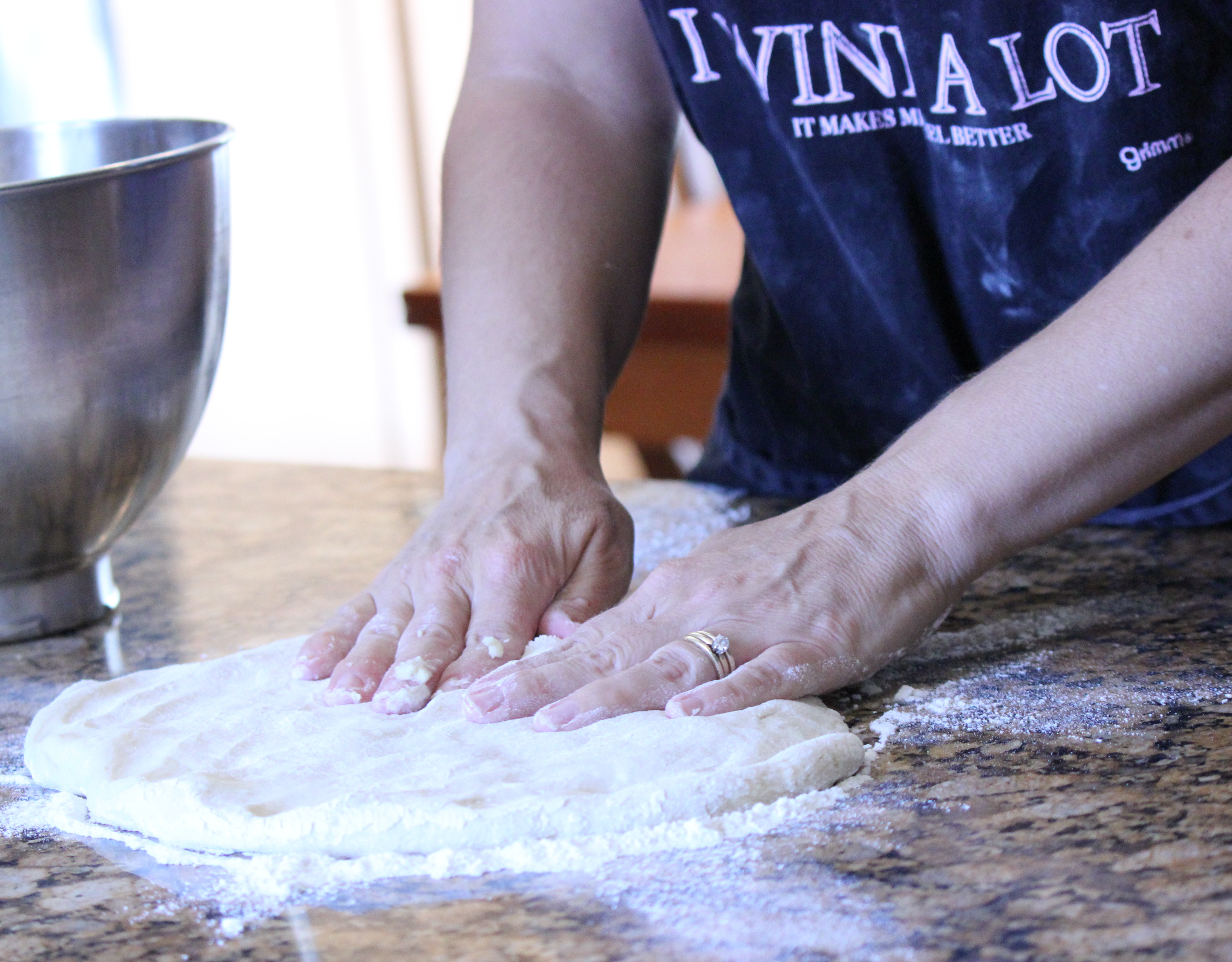
Flour…
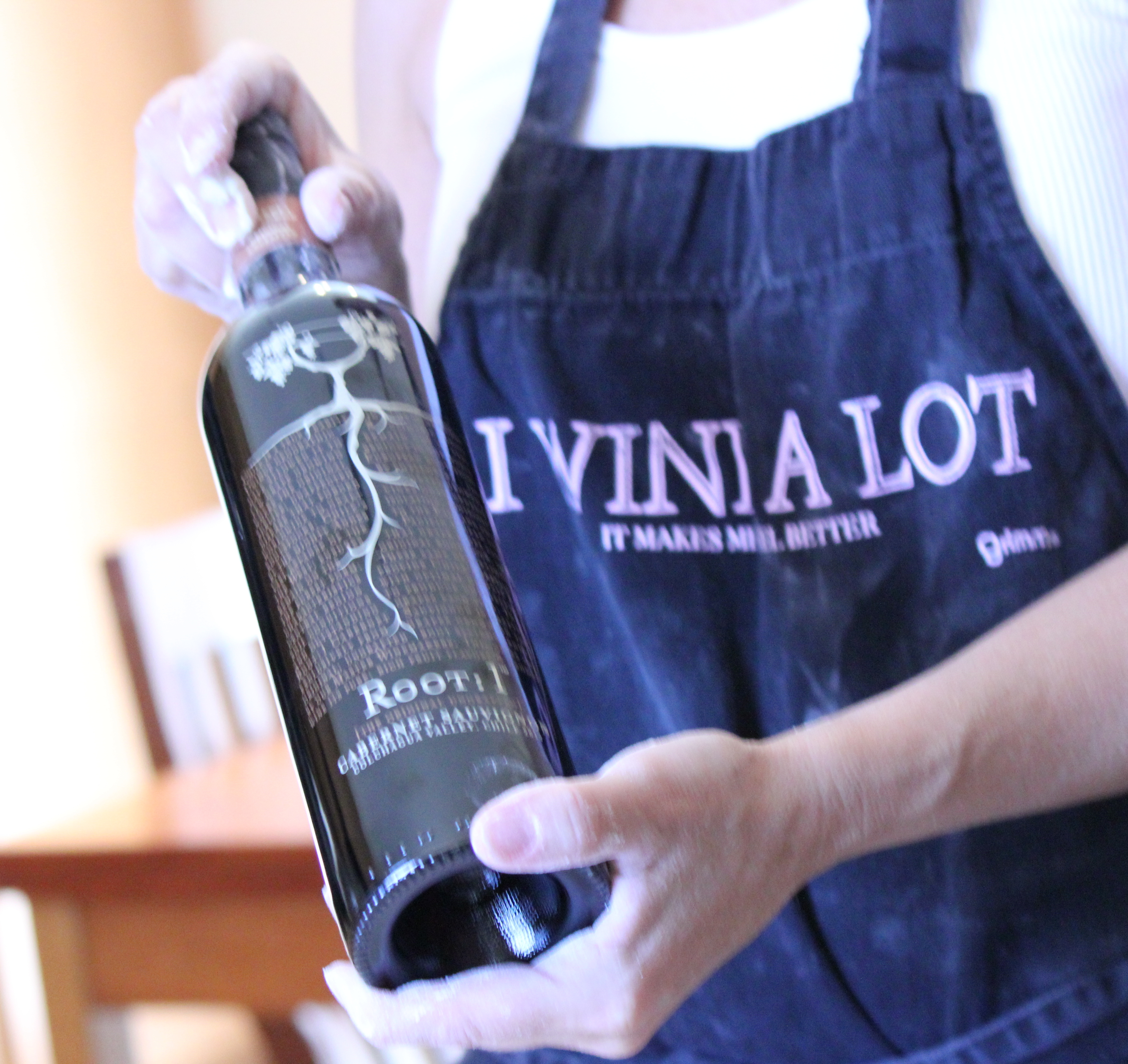
Oops! Remembering you threw out your rolling pin with your last move…Senor Flour meet your new partner, Senorita Botella de Vino!
A beautifully soft dough.
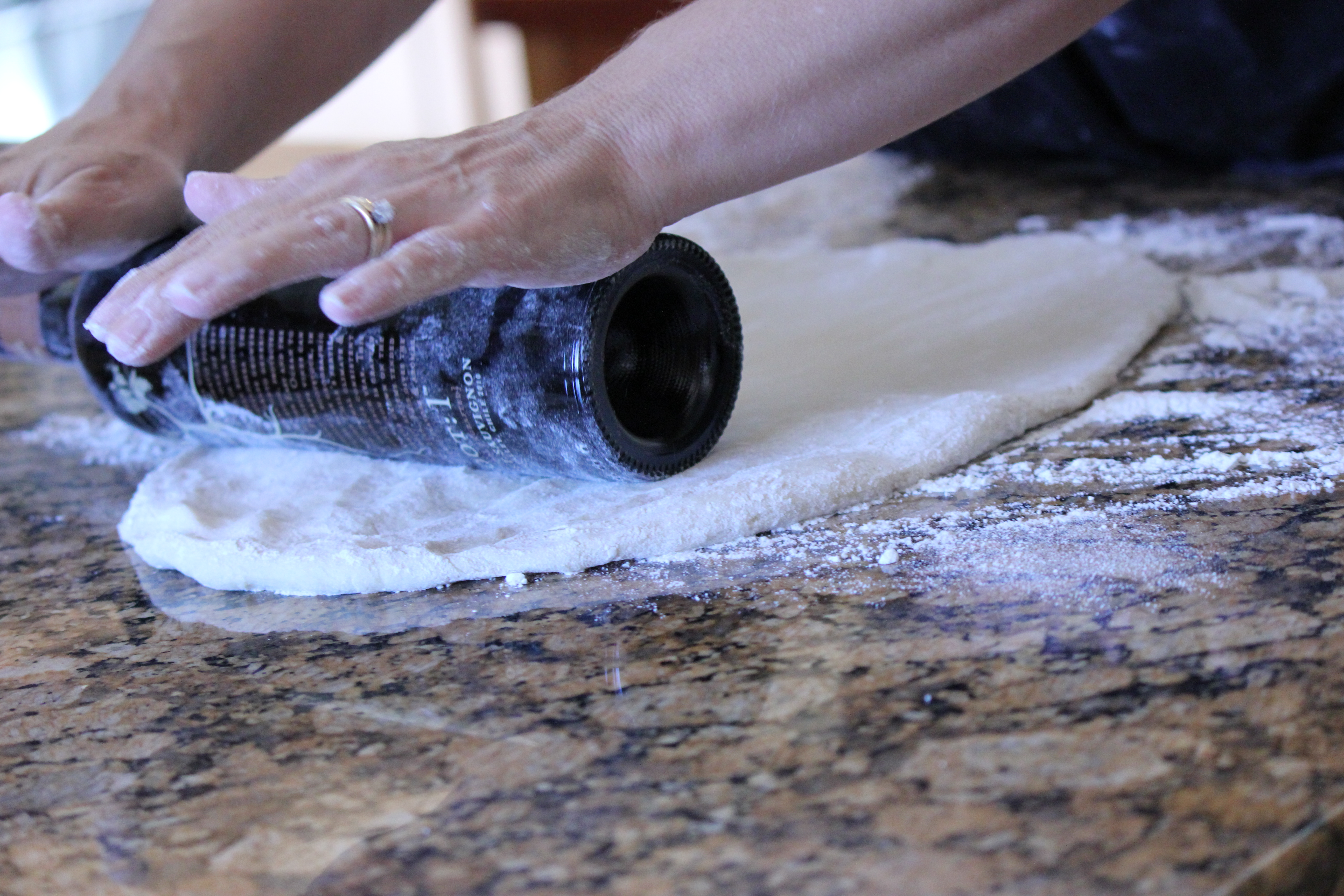
Okay, Botella de Vino, prove yourself!

(She worked so well I may not even buy a rolling pin!)

This is the way we roll.
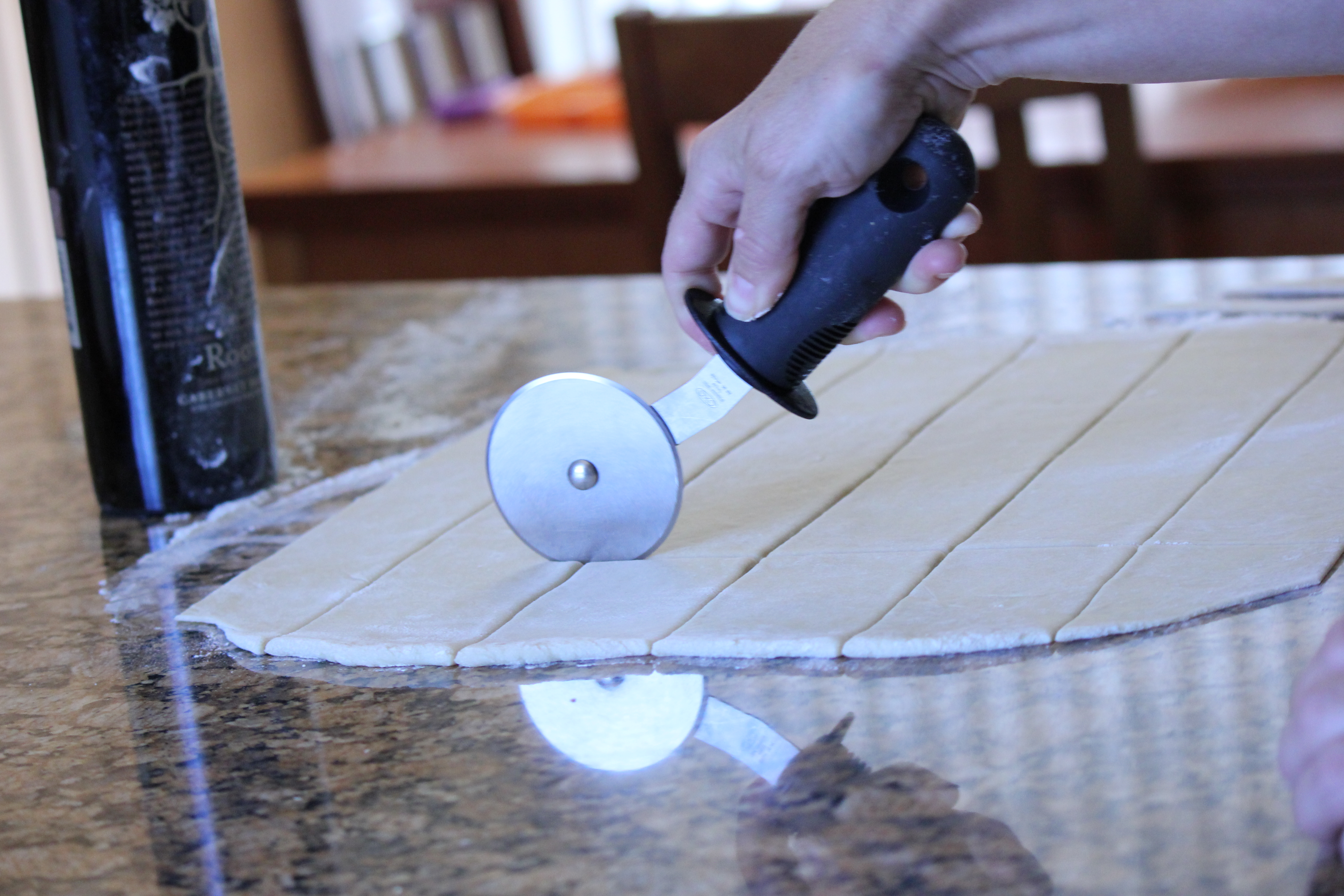
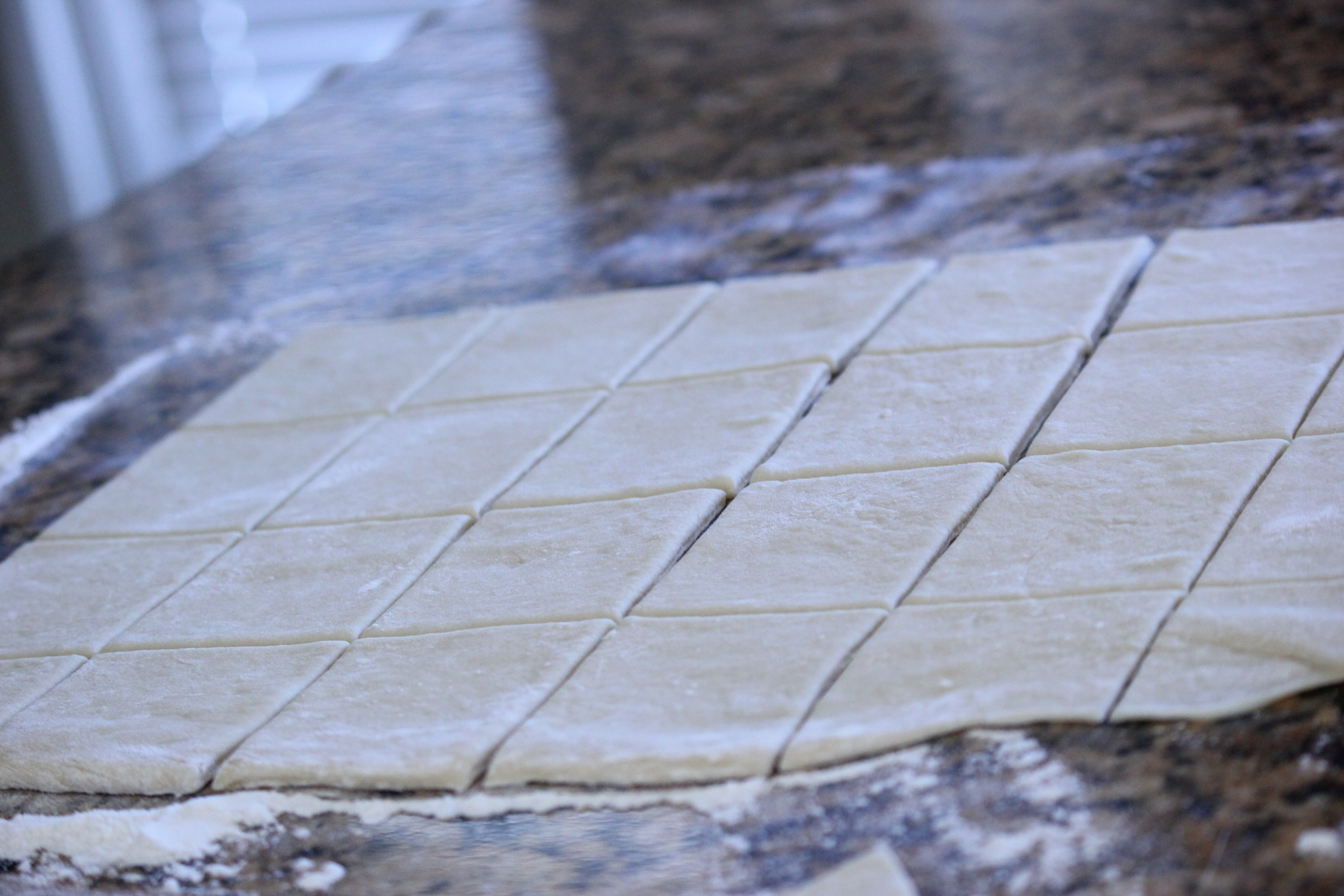
This is the way we cut.
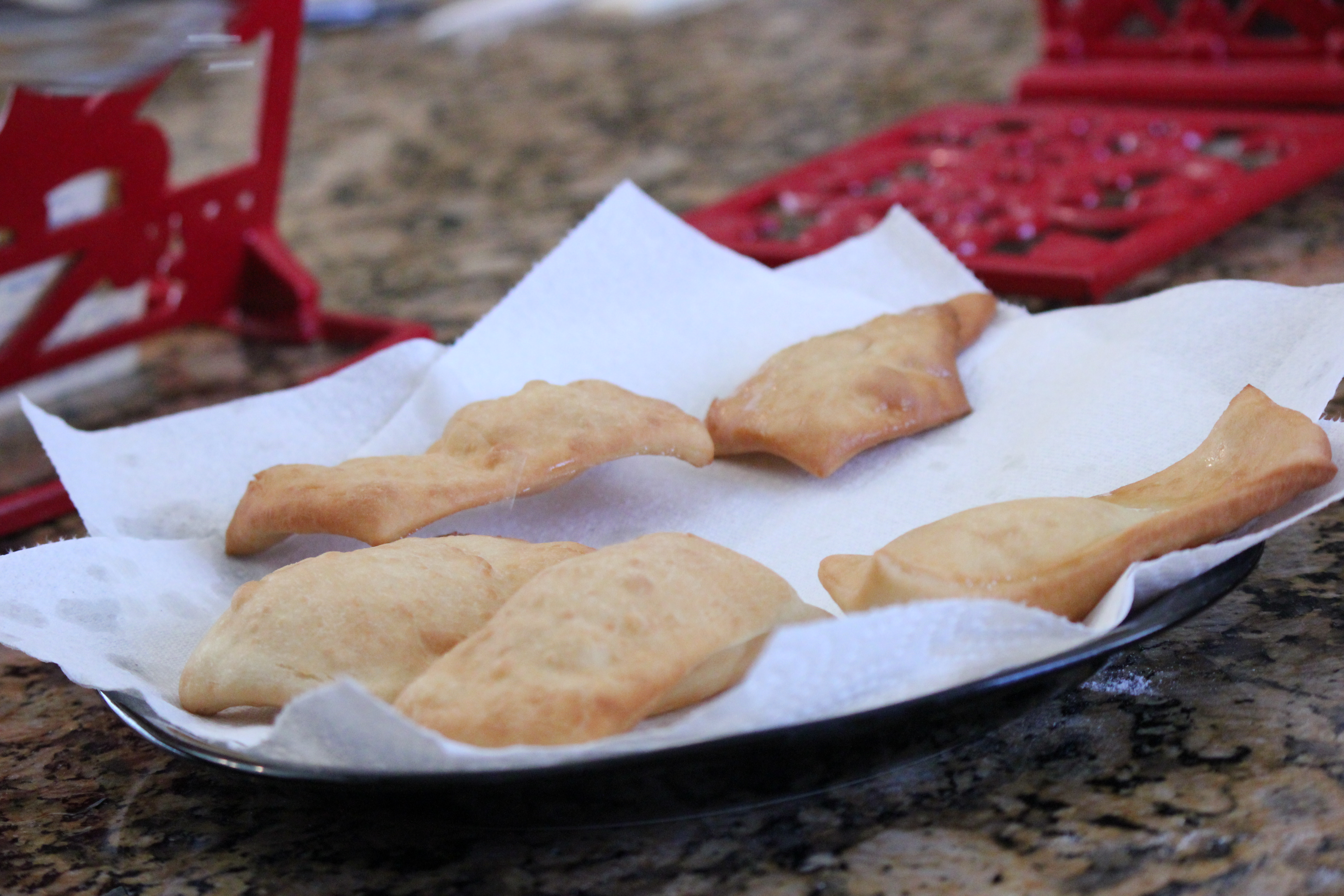
This is the way we rest.
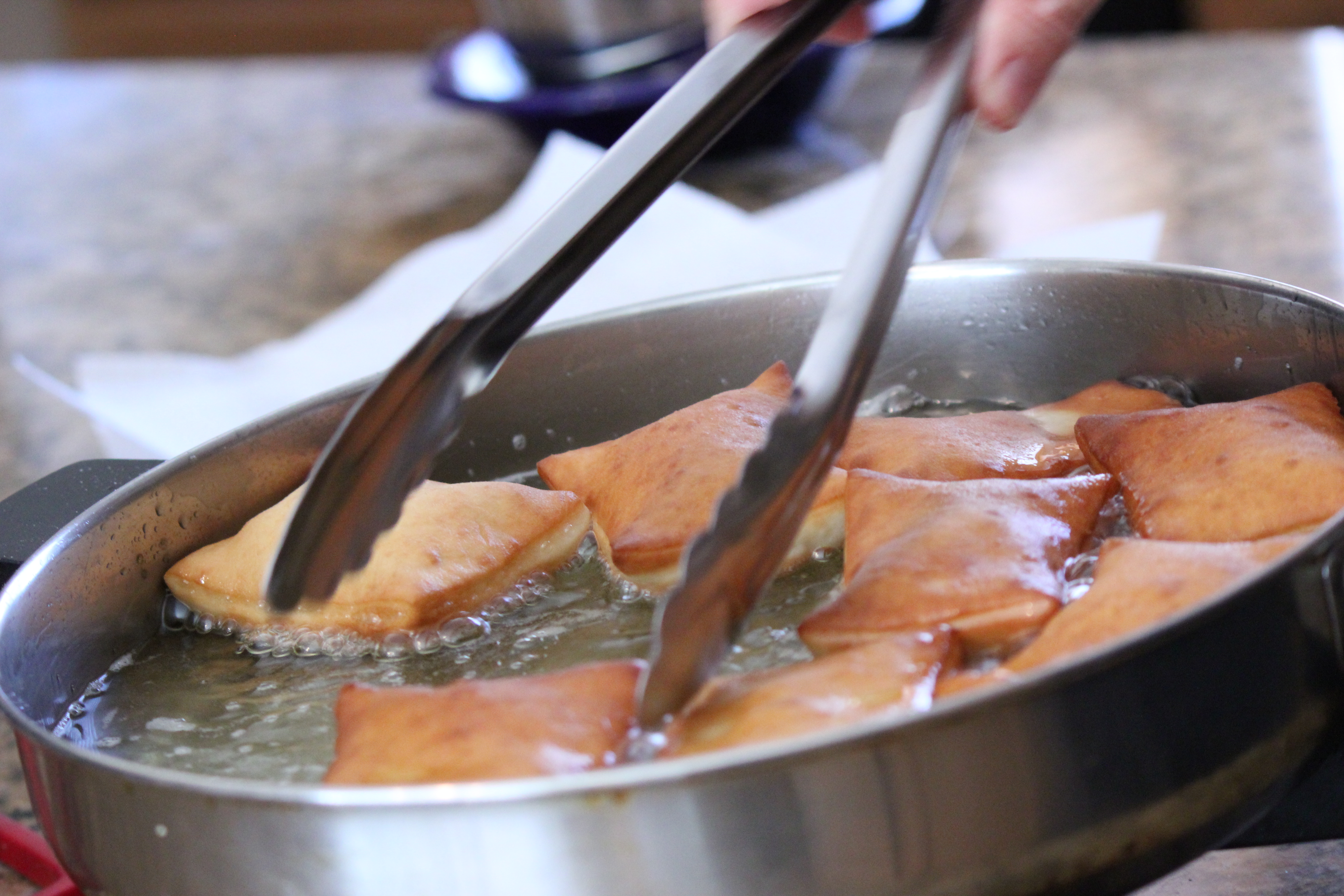
This is the way we fry.
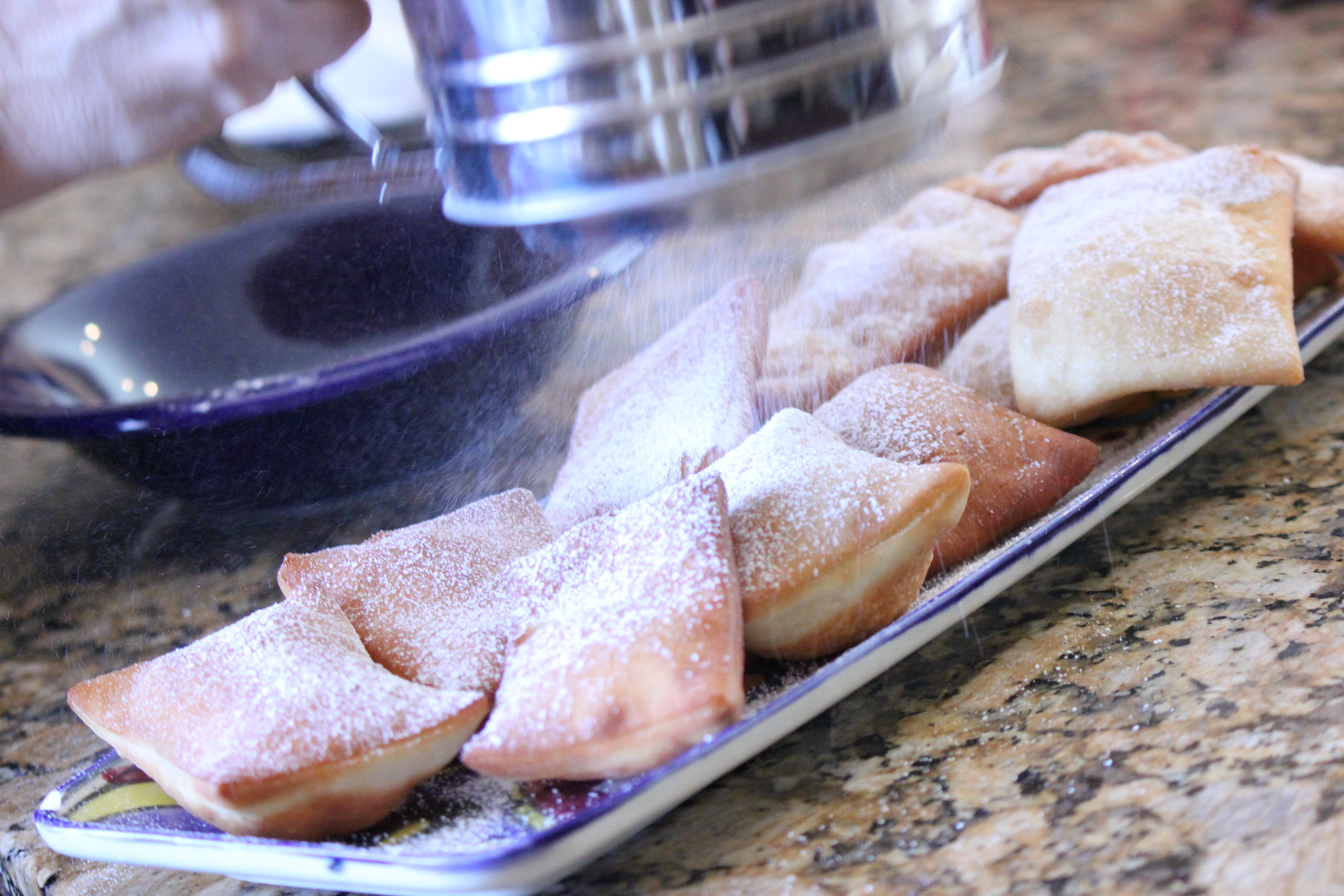
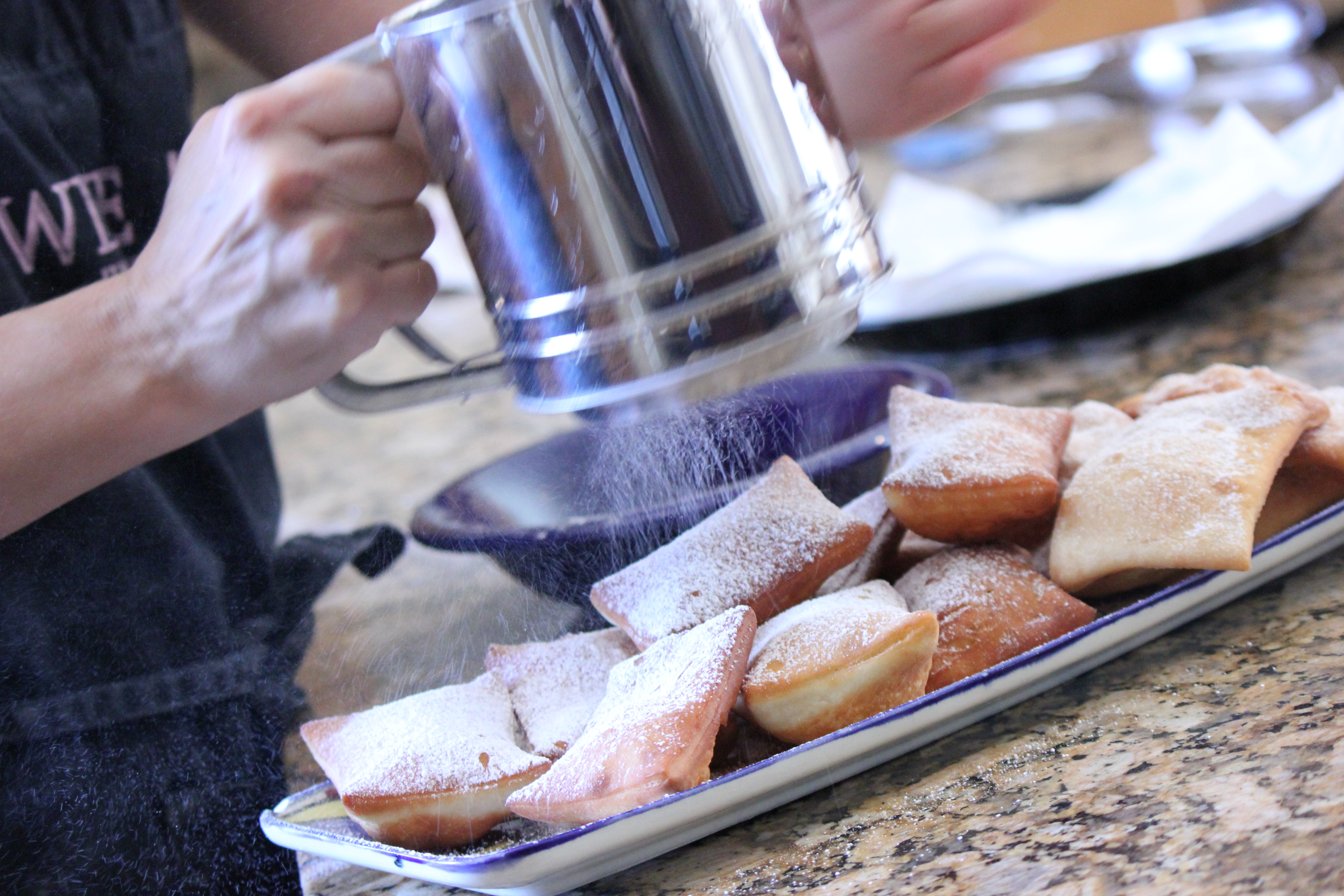
Waiting for a (powdered sugar) shower.
There we go!
With iced café au lait.
And a little chocolate…
And smiles from the ones who started it all.

– All photos by Loey (with the exception of the last one by Katy) –

Jesus was a fiction writer

A picture of me – according to Jesus

Some friends and I have been having a discussion on the importance of fiction, specifically the importance of fiction in the life of a follower of Jesus.  Some of us are more convinced than others.  I tend to agree with the thought that there is usually more truth in fiction than non-fiction.  A woman can write her autobiography and leave out the part where she stole from her employer.  A man can write about the life of another man and leave out the part where the man cheated on his wife.  A journalist can write an objective piece about a political candidate and leave out the part where the candidate lied about his military service.  A story – perhaps a very good one – has been told, but truth has not been completely served.  Opportunities to relate the realities and consequences of difficult situations have been missed.

Jesus, the Word and Truth himself, never missed an opportunity to relate truth in ways that impacted people – even cut them to their very core.  Jesus was a storyteller.  We know this generally from all the parables he told, but largely in almost every word he uttered.  How can it be that Truth Incarnate, can be so intimately linked with Fiction?   It can be because Jesus was also a master of metaphor, and that makes him a master of fiction.  What is a metaphor, but something that is not real, being used to describe something that is real?  In the gospel of John alone, Jesus uses a lot of fiction.  (I found 29 examples in a rather quick perusal this morning.)  Jesus was not literally a light; he was not a lamb; his body was not a temple; he was not water; he was not bread; his flesh was not bread, and his blood was not wine.  Jesus made his living as a carpenter, but never as a shepherd; he was never a grain of wheat or a vine.   People are not fields for harvesting; they are not sheep; they are not branches, and their bodies don’t bear grapes and apples.  John the Baptist was not a burning and shining lamp.   All of these ideas, taken literally, are completely fictitious.  So, why did Jesus say them?  Is he possibly modeling a way of conveying truth to us?  I think so.

Jesus used quotidian objects to convey vital truths to which people could relate and respond to accordingly.  People in an agrarian community know the beauty and the importance of a field ready for harvest.  I remember being a child and standing in my father’s and my grandfather’s wheat fields, smelling the warm, yeasty grains, watching the golden stalks wave in the breeze, rubbing the rough tassels in my hands.  Even then, I knew that time was of the essence; those fields had to be cut within a certain time to do my family any good.  So when Jesus says that people are fields ready for harvest and other people are reapers, I can understand both the urgency and the potential bounty and blessing of the situation.  But people aren’t really fields, and that leads us back to the question of fiction.

Fiction writers, in my opinion, take their cue directly from Jesus.  They take things, situations, even worlds that aren’t real and show us truths that are real.  And I’m not just talking about classic examples like what C.S. Lewis does in The Chronicles of Narnia or what Dickens does in A Christmas Carol.  I’m talking about books like the one I picked up at random from the library a while back.  I’d never heard of Big Wheat or its author, Richard A. Thompson, but what a fictional find.  The story is set in the first part of the 20th century when the American farmer is grappling with mechanization and expansion possibilities.  The main character, Charlie Krueger, is tricked by his “love” into getting her pregnant, so that she can further trick a land-owning, second lover into marrying her. (Already sounds pretty grim, huh?)  Dismayed over the deception, Charlie gets up the courage to leave his abusive father and start out on his own to find a new life.  The same night he leaves, a serial killer kills his ex-girlfriend, and Charlie’s absence immediately makes him the prime suspect.  Charlie doesn’t even know what’s happened until he’s settled in with a threshing crew made up of determined down-and-outers like himself.   As the story unfolds the heartening transformation of Charlie, it keeps you guessing whether good or evil will win out.   It keeps giving you glimpses into the heart of man.  I am not being dramatic or  insincere when I say it caused me to reflect on the story of redemption as well as reflect on people I encounter in real life.

And doesn’t it all eventually come back to the people we encounter in real life?  I love what my friend, Gail, had to say about this.  She said, ” The people I encounter on the written page drive me to people-different people than I would normally be drawn too. When I meet someone I feel like I’ve met a mystery, God’s mystery and I want to unwrap them…”

Let’s get to unwrapping, and…take time to read more of the fiction that might help us do that.

Sons of Nuns

“God bless you, Sister, may all your sons be archbishops.”

Those words, according to The Quotidian Mysteries author, Kathleen Norris, came from the mouth of the poet Dylan Thomas as he lay on his deathbed.  Nuns with sons?  Was this a dying poet’s last stab at cynicism or humor?  Or was it, as Norris proffers, the aesthetic sensibility being “attuned to the sacramental possibility in all things?”

This supposition came to mind this morning on our morning school commute.  For weeks now the kids and I have driven past a mocha colored double-wide trailer home planted amid an estate of dirt.  There have been signs – tumbleweed removal, an unwound garden hose – that something is astir here.  Yet it has remained a largely barren plot, devoid of possibilities to me.  Until today.  Today I notice on the property nearly invisible trees, staked and bound by twine, in slender black buckets.  I think of the optimistic Dylan and wonder, “Trees?  With long, leaf-laden branches freely stretching up to tickle a smile from the austere azure?”

On this thought alone my heart could suckle the milk of possibility for the rest of the day.  But there is more.  Not far down the road a commercial pick-up truck pulls out from another neighborhood.  Almost immediately I recognize it as a testimony of the diversity found here on the fringes of the West Valley, where the White Tank Mountains keep the next haboob from blowing us all into East L.A.  The truck has emerged from a neighborhood of mission-style homes nestled on resort-like estates.  The tall palms here are not bound or staked.  They nod like Arabian sheikhs appraising the water-fetching maidens at the local oasis.

The painted lettering on the truck’s rear window advertises the worker’s trade – Steve’s Wood Creations.  Following and reading, I learn that  Steve specializes in custom furniture and commissioned art.  I wonder to myself how people these days afford “custom furniture and commissioned art.” The soft spot in my heart for craftsmen and artists pulses with thankfulness for Steve’s good fortune.  But there is something else about this mystery craftsman, something that earns my admiration and adds to my hope quota.  According to the window, he also offers woodworking classes.   I wonder who takes his classes.

Maybe the people from the Dirt Estate.

Z as in JaZZ

I made it!  Kind of.  I mean I started with A and here I am on Z, so that’s better than not starting or not finishing at all, right?  It’s been fun to connect with other bloggers through this process.  I’m still amaZed that people do actually time have to write their own blogs and read other people’s, too.   That ability probably gets to the heart of being a true blogger, but then I’m still not sure I belong in that category.  I’m not always comfortable with categories, which is why I’m taking a different tack for today.  The way I see it, this being the last day of the challenge, why not find a word that ENDS with Z?  Don’t get me wrong; I have a son named Zach.  And being the cool kid that he is, he would have been very convenient fodder for his craZy mother’s blog.   But, as I said, playing the game that way, is just too predictable, and Zach would probably be disappointed in my lack of creativity.

So, I picked JaZZ.  Why?  Do I know a lot about jazz music?  Did I ever take jazz dance lessons?  “No” and “No, are you kidding?” are the answers to those last two questions.  As for why…well, I do appreciate and enjoy jazz music, and I did discover this cool website where you can listen to “100 Quintessential Jazz Songs,” including one of my favorites, Take the “A” Train (and no, I didn’t pick that because it fits nicely into the A to Z Blogging Challenge theme.)

And I’ll tell you what: as an added bonus I’ll throw in Zach’s favorite cookie recipe.  If you whip these up tonight, while you’re listening to this play list, it will be the Zenith of your day – maybe even your week.

http://www.jazz24.org/jazz100.html

Zach’s Favorite Cookies

Preheat oven to 350.

Cream:

1 1/2 cups brown sugar

1 1/2 cups granulated sugar

1 cup shortening

1/2 cup butter

Add:

3 eggs

1/2 tbsp. baking soda

1/2 tbsp. baking powder

1/2 tbsp. salt

1/2 tbsp. vanilla extract

2 1/4 cups quick-cooking oats

3 cups flour

1 cup chocolate chips

1/2 cup coconut

Drop by spoonfuls on ungreased cookie sheet.  Bake 11-14 minutes.  Makes 72 cookies.

Xanadu

Xanadu is the first X word that popped into my mind.  I always associate Xanadu (the song, not the movie) with Olivia Newton John, never knowing until today that it is from Coleridge’s Kubla Khan.  Well, maybe I did know that in some hazy literature era of days gone by…At any rate, I’m glad I (re)discovered it today.

http://allpoetry.com/poem/8439799-Kubla_Khan_Or__A_Vision_In_A_Dream._A_Fragment-by-Samuel_Taylor_Coleridge

Wilderness: sandwiches and such

For this, my determined attempt at struggling back onto the blog challenge Wagon, I offer a few quotes on today’s subject:

I don’t like formal gardens. I like wild nature. It’s just the wilderness instinct in me, I guess.” – Walt Disney

In wilderness I sense the miracle of life, and behind it our scientific accomplishments fade to trivia.” – Charles Lindbergh

It is like living in a wilderness of mirrors. No fact goes unchallenged.” – Bruce Babbitt

Generally speaking, a howling wilderness does not howl: it is the imagination of the traveler that does the howling.” – Henry David Thoreau

Once you get over thinking, “Wow!  If Walt could only see Disney World these days,” you can begin to appreciate the wide applications of the idea of wilderness, both literally and metaphorically.

One of my personal favorites is the wilderness of the biblical exodus.  Well over 20 years ago, the pastor at my church at the time was preaching through the book of Exodus, and I remember him commenting how God could have easily chosen to shorten the days of Israel’s wanderings.  But there was purpose in those 40 years.  His admonition for our little flock was to remember that God could do the same for us.  In whatever wilderness we might currently have been wandering, he assured us that it was completely within God’s power to remove us from it instantly.  If He didn’t, we could be confident that there was a reason why we were still there.

I’ve thought of that lesson many times over the years as I’ve either strayed into a wilderness by my own neglect or a providential plunging which can only be ascribed to God’s good purposes.  Often in such wanderings my eyes are either darting around so furiously in panic, or fixed so determinedly on my outward bound path, that I am oblivious to intersecting the wilderness routes of others.  Sometimes I get frustrated with my fellow pilgrims because I assume they’re just being foolish and annoying as they zip along their merry highway, when it is likely they may be panicked or determined, too.  I think most of us are usually in some kind of wilderness at least part of the time.  I need to be more thoughtful and compassionate.

John the Baptist was a man of the wilderness.  He ate locust and honey.  When I was growing up and my family went on outdoor excursions, we ate Wilderness Sandwiches.  They weren’t crunchy with locusts, but they were sweet like honey – and filled with carbs and protein for energy.   To make Wilderness Sandwiches, you must either start with a pancake dinner or a pancake breakfast and intentionally make extra pancakes to use in the sandwiches.   You take the pancakes, spread a thin layer of brown sugar on each, place a piece of crisp bacon in the center, and roll it up.  I guess today, we’d call these Wilderness Wraps, but back then wraps were what we used to keep us warm on the trail.  No matter what you call them, they’re good for sustaining you through a day of wandering in the wilderness – the real OR the metaphorical.

Quite predictably QUOTIDIAN

My friend, Laura, who is almost solely responsible for my participating in this blog challenge, reminded me early this morning that TODAY is my day.  By that, she  is referring to my near obsession with the word QUOTIDIAN.  I told her that I was tempted to be unpredictable and find a different word, but ultimately I’m just too, well…QUOTIDIAN for that.  So, yes, I will take this opportunity to wax once again on the glories of all things QUOTIDIAN, especially the word itself.

I love that the word QUOTIDIAN is itself not QUOTIDIAN.  It’s a “Q” word for crying out loud!  I can only imagine the things my husband could do with this word in a precisely played Scrabble move.  I’m trying to do my part to make it more QUOTIDIAN, as far as common vernacular goes, but that may take some time, as evidenced by the fact that I almost hyperventilate whenever I happen upon it in my QUOTIDIAN reading.

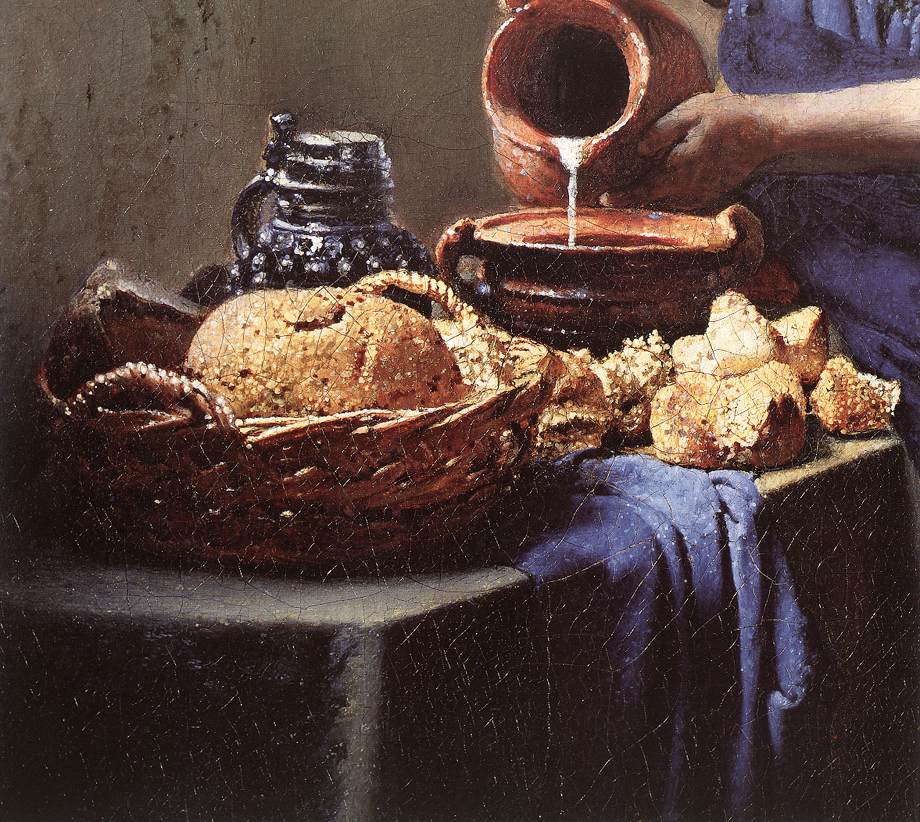
I love that my first (remembered) encounter with the word was when I read an article about a special exhibition here at the Phoenix Art Museum: Rembrandt and the Golden Age of Dutch Art.  Considering the exquisite details in this era of art, it is particularly striking that a writer would choose the word QUOTIDIAN in discussing it.  But it is precisely because of what is depicted by these artists that makes the word so apropos.   (I have previously blogged about Rembrandt’s associations with “common man.”)  Besides Rembrandt, one of my favorite Dutch artists is Vermeer.  Vermeer excelled at depicting QUOTIDIAN life; e.g., a milkmaid going about her daily tasks.

These type of depictions are especially poignant to me.  I remembered transitioning from the hectic and exhilarating life of a successful career woman to the life of a full-time homemaker and stay-at-home mom.  Learning to embrace the beauty, the excellence, and the blessedness in the ordinary was key to my contentment and my exceeding thankfulness in this role.

Another friend, upon learning of my extraordinary affinity for the QUOTIDIAN, gave me a little book which I carry around with me in my purse., The Quotidian Mysteries – Laundry, Liturgy and “Women’s Work” by Kathleen Norris.  Norris is the kind of woman with whom I could have a cup of coffee while folding a basket of laundry.  She “gets” life, and I am reminded of this every time I take her book from my purse and start reading where I left off.  Just yesterday I was re-reading her thoughts on “human love,” which she says, “is sanctified not in the height of attraction and enthusiasm but in the everyday struggles of living with another person.  It is not in romance but in routine that the possibilities of transformation are made manifest.”
Isn’t this true for other areas of life as well?  Several years ago I had a situation with laundry.  My washing machine broke, and with a husband and six kids you can only go about two minutes without a washer.  My friend, Diane, rescued me by offering to do a few loads for me, and in accepting this offer of help, I experienced one of those “sanctified routines.”  It is humbling to have even the best of friends handle your dirty clothes.  I remember thinking, “Well, I really don’t want her to have to wash our underwear…” But we needed underwear!  What is more QUOTIDIAN than underwear?

In another place in her book, Norris says, ” …the aesthetic sensibility is attuned to the sacramental possibility in all things.”  Even underwear?  Yes, and milk and bread, and…

QUOTIDIAN – occurring every day;

belonging to every day; common place, ordinary

P: My PAT answer

P at, my friend,

R eminded me when I was yet on N, that

E ven when our dreams fall flat or

S end us

S earching for some class or

      O nly serve to scare us

      N ight will pass away and Hope will

                    P ull me into dawn’s new day

                    R ays will shine and

                    E nd my fears

                    S he didn’t say it exactly like that

                    S he said two words, then

                          O ver again, and I am

                          N ow repeating them…in my own way

Oooooo!

When my stepfather sold part of the property he owned near the beautiful Niobrara River in Nebraska, the new owners were curious about some of the plants my mother had left growing in the garden.  They wondered if they might be “some kind of Oklahoma pepper.”  My mom is an Okie, but the plants were not peppers, they were OKRA.

Here, once again directly from the pages of my Secrets from the Southern Living Test Kitchens book, is the definition of OKRA: “Slender green, fuzzy, fingerlike pods containing numerous small, edible seeds.  Brought to the South by African slaves, okra is still popular in Southern cuisine: it’s an ingredient in many dishes, such as gumbo, but it can also be fried, steamed, or grilled as a vegetable.  Okra has a mild flavor, but when cooked in liquid, it give off a viscous substance that thickens the liquid.  Okra is at its peak during summer months, but it’s also available canned and frozen.”

Thankfully, even though I strayed a little from my own Oklahoma roots, God let me find an Okie to marry so we could engage in lively debates over the best way to prepare OKRA.  We both agree that steamed or boiled is just too slimy, but he prefers it dredged in cornmeal and fried in bacon drippings.  I do agree it’s pretty hard to beat anything dredged in cornmeal and fried in bacon drippings, but I also love OKRA pickled.  He won’t allow pickled OKRA within a country mile of his mouth.

Blogging from A to Z Challenge April 2012