A Funky Bunch

We watched the movie Crazy Heart the other night. It was like taking a cow path off yet another of the many dirt roads that meander back into my childhood. Jeff Bridges’ obvious Kris Kristofferson-like persona plopped me smack dab into the backseat of an early 70’s brown Ford LTD. I’m sure it’s not every child that has memories of going on dates where she is the one in the back seat and her mother is the one with the boyfriend in the front seat. Such times found me sandwiched between my little brother and my older future stepsister. I stared at the back of my mother’s head. In my opinion it was way too close to my future stepfather’s. Green light from the dashboard gleamed around their cozy profile. It was a very innocent situation that grows tawdry and scandalous in the mind of a protective nine-year old. And it was all accompanied by the eight-track of Hank Williams’ Greatest Hits.

My stepsister, already obsessed with the music, image and blue eyes of Kris Kristofferson, mocked the Hank Williams’ music that cycled through the speakers. In hindsight I’m a little amused at her uncharacteristic ignorance of Kris’s musical influences. After all, Kris did pen a certain lyric which was a not-too-subtle suggestion about what you could do to his backside if you didn’t like Hank.

In the movie, it was another song from my childhood soundtrack (Waylon Jennings’ Are You Sure Hank Done It That Way) that hailed Hank’s reign and influence.

The outlaw music of Jeff and Kris, Hank and Waylon was still lingering in my mind a few nights later when I was at the kitchen table playing a raucous game of Chicken Foot with my kids. Typical for such extended games, distractions were bubbling and brewing as the game wound down. Three kids were texting friends; one was telling a story about finding an improperly disposed of dirty diaper at his place of employment. They were all singing – different songs, none the soundtrack looping through my subconscious thoughts. Noodles and cookies were eaten and analyzed. To my children’s horror, I confessed my aversion to plain M & M’s.

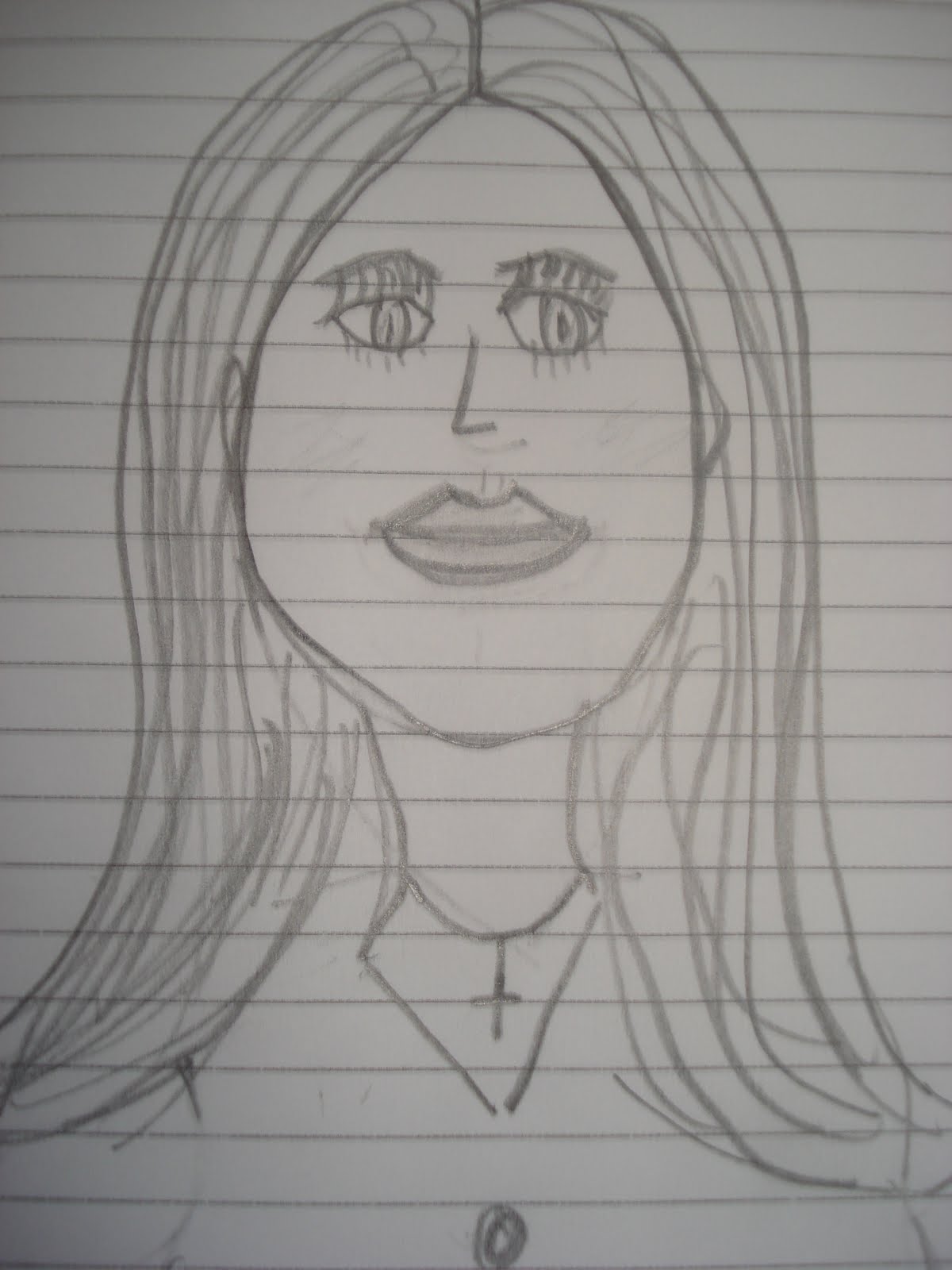
I was able to fight off any frustrations with these distractions by focusing on my duties as scorekeeper – and official “doodler.” At the end of the game, when I had won and the youngest losers had been sentenced to putting the dominoes back in the box, I continued my doodling. I felt my daughter breathing down my back and jiggling with giggles. “Before you made some changes, Mom, I thought that looked like Jesus.”

The same thought had crossed my mind; however, with the revisions, I decided the picture looked more like a self-portrait. Still, I pictured Jesus, whom Kris had called a Capricorn with a “funky bunch of friends.” There was a funky bunch of Jesus’ friends horsing around my kitchen that night. Strange how Kris’s lyrics still had an uncanny way of coloring my life.
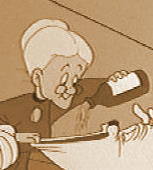

Granny Get Your Bun

It doesn’t appear that I will be a grandmother anytime soon (or a mother-in-law for that matter) but half of my children are daughters, so that means that the topic of future grandchildren does come up from time to time. While the other half of my children mysteriously vaporize when my next matriarchal stage is discussed, my daughters happily share with me their visions of this joyous time. When the topic came up yesterday the girls debated what future grandbabies would call me. My youngest proposed Momofmymom. This moniker has really grown on me. It rolls off the tongue in a lilting, clickety-clack kind of way that perhaps represents our musical heritage. Or maybe too many readings of The Little Engine That Could. Still, part of me is envious of my Greek friends whose children call their grandmothers Yiayia. Now that’s a cool name for a grandmother. At times in my life coolness has been a priority.

Unfortunately, my sister and I were not on the same timetable when it came to cool grandmother names for our mother. Being the oldest, it was her privilege to determine what the grandchildren in our family would call our mother. Though I love my sister dearly, her choice was not what would have been mine. I’ve never told her this (until now), but she couldn’t have picked a worse time in my life to decide to call our mother “Granny.”

I am 13 years younger than my sister. I was ten when I first became an aunt. That was fun; I loved babies even then. However, having lost our father a couple of years before, I was also adjusting to a new life with a new stepfather in a new small town where all my friends’ mothers seemed barely older than my own sister. It was almost cool to be an aunt, but having a mother who was a grandmother was questionable. I swear I would have died from embarrassment had any of my friends heard that my mother also went by “Granny.” This was, in fact, the only reason I was thankful my precious little niece lived 480 miles away. At least I didn’t have to risk being seen in public with her and her “Granny.”

At the time, I only knew of two Grannies: the tottering, bun-headed one from the Sylvester and Tweety cartoon and the dear little old lady who had been my sister’s own babysitter. I get now that my sister was honoring the memory of this woman by calling our mom Granny, but my memories of Granny Bessie extended only to remembering that she had a really nifty broom closet and that she was old enough to be dead! My mother (whom I had also recently begun calling “Mom” instead of “Mama” due to peer pressure) in no way represented a Granny. Never mind that she always looked younger than her years, she had no bun, puttered but never tottered, had no broom closet, and most importantly – was still alive!

I guess in the end, the only thing that really matters is that all my mother’s grandchildren love their Granny. I hope it will be the same for me. According to my daughters, I will be hearing a lot of whatever name is decided for me. They all want large families, but I have to say that I question their motives since one proclaimed “if only to prove that not all large families have snotty-nosed kids.” Guess this means I don’t need to fear being called Granny Hankie.

The Story That Wasn’t

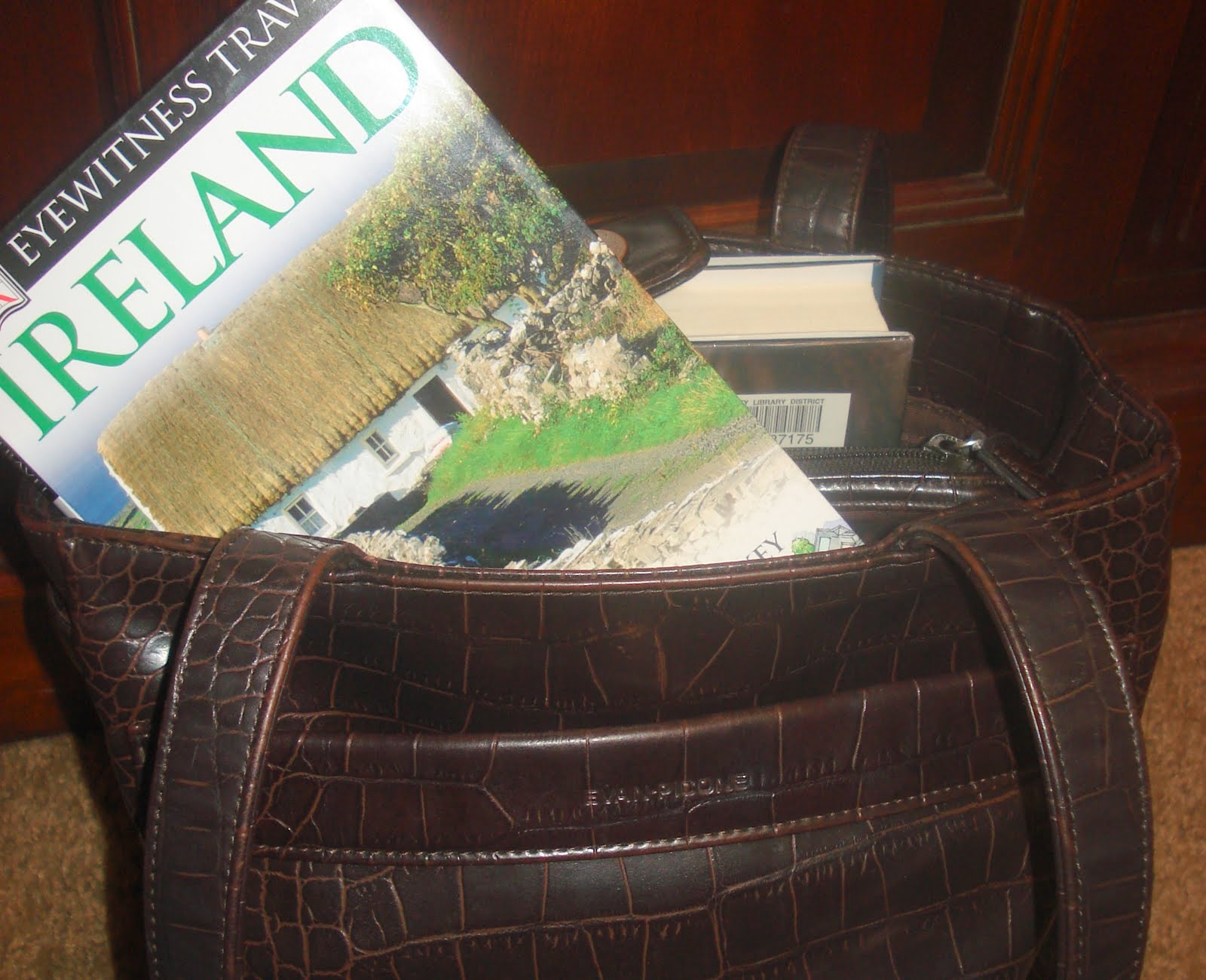
I’m back from Ireland and castigating myself for that promise I made to come back a better storyteller. Fluently “talking the craic/crack” is something of which a Yankee like me can only dream. Besides, my best story is probably the story that wasn’t. You know the saying, “a picture paints a thousand words?” Well, this picture (the one above) paints about 600… pictures!

It was our last day in Ireland. We were lolly gagging around on O’Connell Street in Dublin – window shopping, people watching, building gawking – and Jay was messing around with the camera. Somehow he had switched it to the video setting, and he couldn’t get it off. Finally, he decided to stop and work with it until he got it fixed. The luck o’ the Irish was definitely with me because at that moment we were in front of an Eason store (kind of the Barnes and Noble of Ireland, I gathered.) Our location was obviously providential, so I left Jay at his attempts at camera configuration, and I went in to look for that book of Irish folk songs I’d been wanting.

About 15 minutes later (book and CD in hand) I emerged to find Jay still working on the camera. He’d fixed it, all right – he’d lost all of our pictures! “Pray for a camera shop,” he said. Prayers must ascend through the air more expeditiously in Ireland. We walked a short ways, turned the corner and beheld that glorious yellow Kodak sign. The sympathetic clerk within couldn’t help us, but she directed us to a shop on Grafton Street, about a 20 minute walk away.

Jay was visibly anguished, nearly sick over the thought of having lost all our photos. The hike to Grafton Street, a trendy area we’d enjoyed on another (happier) day, was a somber one. I consoled Jay (and myself) by telling him that it would “make a great story… who goes to Ireland for nine days and comes back without any pictures?” I began to mentally write the story about the story. It didn’t make either of us feel any better.

The friendly tech-friendly guys at the Camera Shop on Grafton Street made sure we understood that it would cost us 20 euros, regardless of whether or not they recovered our photos. They told us to come back in four hours and they’d hopefully have something for us to look at. But we’d already experienced how quickly prayers are answered in the Irish air, so we came back in two hours. The guy in the round wire-rimmed glasses popped a disk in their computer. Filling the air of the bustling little shop with our silent prayers, we fixed our gaze on the screen. And there they were! I could have sworn the strains of Handel’s first performance of The Messiah were still lingering in the air that day, for the “Hallelujah Chorus” erupted in my brain.

Thus ends The Story That Wasn’t.

Off to Ireland

“Off to Ireland.” I realize my title leaves little to the imagination. I’m going to Ireland, and no one is more surprised than I am. It’s a great story, but I’m going to wait to tell it. I’m hoping to pick up a few pointers from the legendary Irish storytellers, and Lord willing, come back to tell an even better story. With a wink to my kids, I leave you to ponder this blessing:

May the light always find you on a dreary day
When you need to be home, may you find your way
May you always have courage to take a chance
And never find frogs in your underpants

Psycho Princess in a Spin Cycle

Have you heard the tragic story of the little girl who was accidentally killed when she hid in the dryer and her unknowing mother scorched and tumble-fried her with the load of cottons? I heard this story from my own mother, one of the most mild-mannered and honest people I know. However, at some point I did start wondering if it was all a scare tactic to keep me and my younger brother out of the enticing mini-amusement park ride which beckoned to us from our own laundry room.

It worked, this scare tactic. I’ve always had an abiding respect for the dryer and his sister, the washer. They are the most noble of all appliances. They are the Prince and Princess of Utilitaria, that most practical territory of our lives. They reign because, “Life is Dirty.” It needs a cosmic google capacity, mega-heavy duty washer. (Feel free to insert your own profound metaphors here; e.g., a unit that only washes in blood, etc.)

So what happens when Prince or Princess breaks down? Well, life gets even dirtier. I learned this amid a month of personal chaos, in which we moved across town, my son totalled his car, and my hyper-competitive husband started his own business. Princess Washer going bouncing-off-the-walls psycho on me was just the icing on the cake – or should I say, “the fabric softener in the rinse cycle?” Of course, I blamed the Big Three events for my even more sleepless than usual sleepless life. After a month of hand-washing, borrowing friends’ washers, and trips to the laundromat, we finally got around to having Psycho Princess diagnosed. Our friend, Kelly, successfully exorcised her demons, and I’m wondering how to go about petitioning that he someday be named the Patron Saint of Utilitaria. Princess has been redeemed from Psycho Princess Purgatory, and that means that I have been, too, I guess.

Upon her redemption, amid a bizarrely euphoric laundry binge, I realized that I’d misdiagnosed my own inner spin cycle. I had wrongly believed that my angst stemmed only from the move, the wreck and the business. Rather, it was probably because I hadn’t been able to do the laundry! Never again will I underestimate the cathartic sorting and cycling, folding and putting up of laundry. And I’ve discovered an anecdote to tell my own children: “When Mommy starts stressing, bring her a pile of laundry to fold.”

A Story for My Mother (About Plastic Signage)

In the sunny breakfast nook of my grandparents’ 1950’s era farm house, a plastic plaque hung above the windows on the wall at the end of the table where my grandfather always sat. It was dimply gold plastic, the type that is poured out in a sheet over a mold. It was a nice enough looking plaque, although I’m sure that there are those who would consider plastic signage in a breakfast nook a little tacky.

Maybe I was just sensitive to the quality of room decor at an early age. After all, I was sophisticated enough in my manufacturing knowledge to know that this plaque had been made by a local business “in town.” Dimension Plastics was owned and operated by the same folks who owned and operated Brown Sundries, and they surely stirred up sundry interest in plastic signage. Everywhere my six (or was it seven?) year old eyes looked, there were rectangular plastic signs, especially magnetic ones that clung to people’s cars. Those signs hung on for dear life. They had to. This was northwestern Oklahoma where the taunting wind was always threatening to sweep away, along with a bobbing parade of tumbleweeds, anything that wasn’t tightly nailed down – or in this case, tightly affixed by magnetic strips.

The sign in my grandparents’ house had no magnetic strips. Regardless of how it stayed on the wall over the decades, what stuck in my mind was what it said: “The best thing a father can do for his children is to love their mother.” It would take a few years, but after awhile I began to suspect the intentionality of this message. It wouldn’t have surprised me if my mother and her siblings hoped that these words would magically rain down and soak into my grandfather’s brain as he sat there at the table, perhaps munching on one of his famous yellow-meated watermelons. What a good rain could do for fertile ground was evidenced not only by the watermelons, but also by the view of the lush golden wheat field just outside the big picture window in the next room. At any rate, my grandparents were married over 75 years, so I don’t think there was ever really any doubt about whether they loved each other. I do, however, recall one of my aunts describing her father as a “bull-headed old Democrat.” And my grandmother was no fainting flower. Once, when I balked at trying to climb a tree, she scolded, “Don’t be a pansy!”

If my grandfather needed the reminder to love his children’s mother, I’m guessing that this might be a good admonition for the general population of fathers. If you’re reading this as a child who is wondering what to do for your mother this Mother’s Day, maybe encouraging your father in this way might be a good idea. Just don’t do it with tacky plastic signage.

From Slippers to Soul-Searching

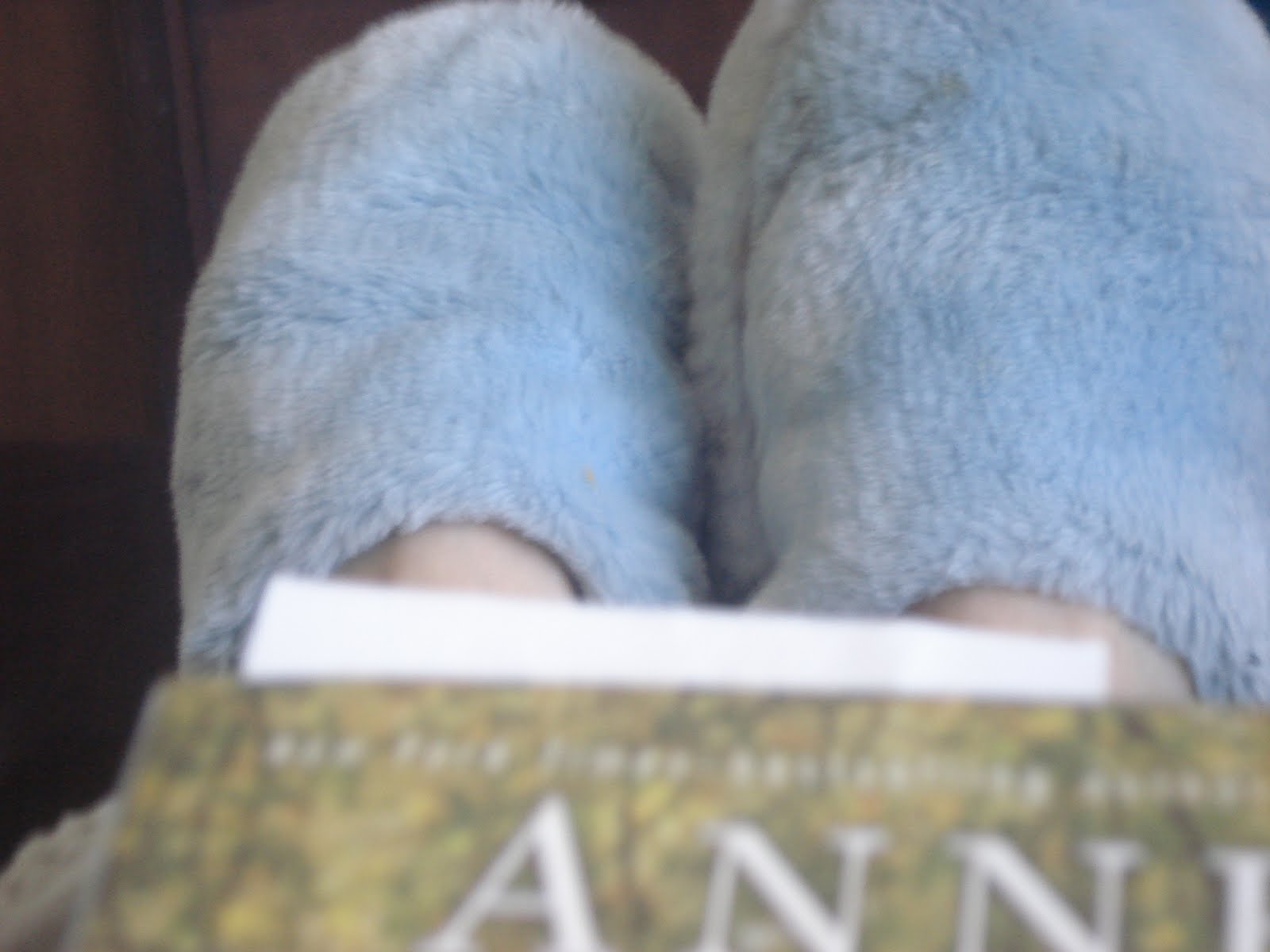
It’s been a rough last couple of weeks. By late afternoon yesterday all I wanted to do was take out my contact lenses, slip into my fuzzy old blue slippers and curl up with an Anne Lamott book. I had nabbed an Anne Lamott book from a shelf at our teeny local library earlier that day. The slippers I’ve had since my 40th birthday party. Every time I slip them on I wonder if the friends who gave them to me thought they were hideous and never seriously expected me to wear them. I wonder if they would be embarrassed – or amused – to see me shuffling around the house (and occasionally into the driveway) in them.

Another friend gave me reading glasses for my 40th birthday. I didn’t need them (then), but as it turned out, my husband did, and I will never forget the moment he realized this need. We were at a conference at our church, and people were volunteering to read Bible passages. My husband stood up to read, and lo and behold, he couldn’t see the print. At that moment, watching him uncomfortably struggle to focus and read, I wanted to cheer. If we had been Holy Rollers, I would have made my way to the aisle, raised my hands, jogged in place, spun in circles and testified with loud “Hallelujahs!” My husband had entered my world, my coke-bottle-lenses, groping-for-my-glasses, it-hurts-like-hell-because-there’s-something-on-my-contact-lens world. That wasn’t exactly the extent of his impairment, but my imagination was going wild in that delirious moment. At any rate, since we were a Frozen Chosen body, I just sat there smugly rejoicing that in this little way he could finally relate (on some level) to my visually challenged world.

My husband entered my world that day quite unintentionally, the victim of the whims of Age. People do this type of coincidental weaving in and out of our lives all the time. It’s quite remarkable when people enter our flatulent, fallen, near-sighted, far-sighted lives, intentionally. Here I should say that “context is everything.” I’m a Christian, a follower of the Jesus who died to forgive a world of sinners like me. Within the context of this world, “unforgiving Christian” should be an oxymoron. Sadly, even non-believers know that this is not the case. We Christians, not only fail in our following in Jesus’ example of forgiveness, sometimes we boast about our lack of forgiveness. Sometimes we think we have good reasons for withholding forgiveness; e.g., the other person “needs to learn a lesson first.” Thankfully, Jesus didn’t wait for us to learn our lessons before he forgave us.

When people demonstrate this type of forgiveness, this type of intentional entering into another’s world of suffering – like some of the people in my life the past two weeks – it is an amazing thing. Seeing it makes you want to emulate it, and thankfully, you don’t need any kind of eyeglasses to get a clear picture of its beauty.

Paper, Ink, and Water

Amazon boasts that “no paper, ink, or water are used in the production of electronic books” (such as their Kindle Ebook Reader). No paper, ink, or water? They find this something of which to boast? I practically nursed my kids on paper, ink, and water! Next to bread and wine, I can’t think of anything more essential to one’s basic sustenance. But, I suppose these pseudo-book devices have their perks.

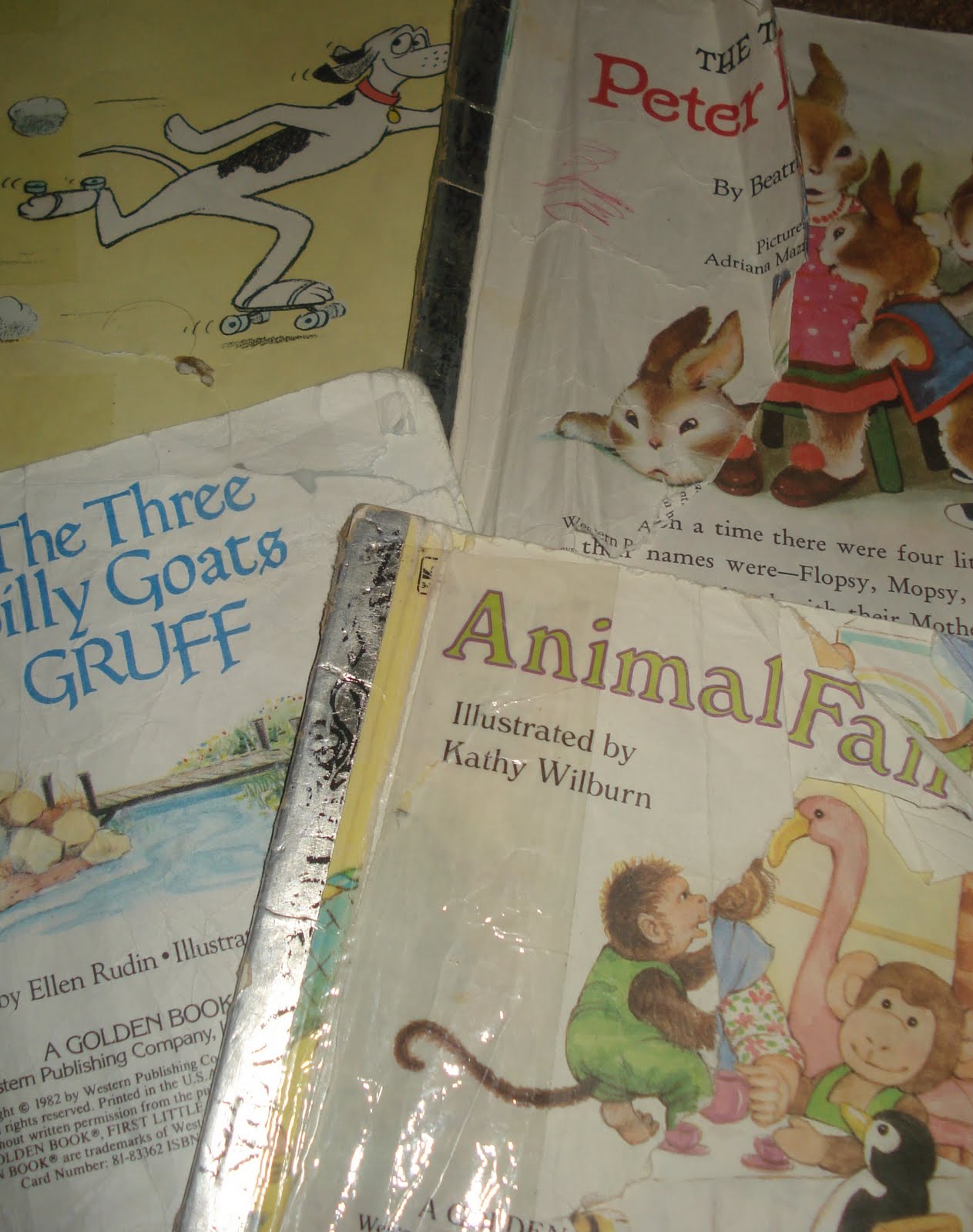
One could probably read Peter Rabbit and Go, Dog, Go a thousand times and never have to worry about cracked binding, dog-eared pages, crayon markings, chocolate milk stains, cracker crumb impressions, or missing covers. And who would miss the lineny feel of paper? Or the inky-organic-pulpy-paper smell? And holding a smooth plastic case and touching a lightly glowing screen or blocky keypad has to be better than helping dimply little fingers master the tricky art of page-turning. Right? Well, quite frankly, I’m having a hard time conceiving of such a world.

As I spent this week unpacking and settling in our new home, I wrestled my way through the realization that I probably really didn’t need to unpack the Little Golden books or Dr. Seuss. My kids can all read on their own now. They’ve moved on, but not before leaving a literal paper trail of “book immodesty,” i.e., the state in which a book finds itself being publicly coverless. With books and people alike, nakedness is a sign of intimacy. “If it ain’t got a cover, it probably was a lover.”

I consoled myself (about my kids moving on) with the hope that someday I will be able to read these lovers to my grandchildren. We will cuddle up in my overstuffed chair, and surely my grandkids, idyllic creatures that they’re bound to be, will choose these treasures over a slick slice of story-in-a-box. They, too, will feed on paper, ink, and water. And then Grandma will go to her glowing screen and chunky keyboard and blog about it.

Books Balance Box Invasion

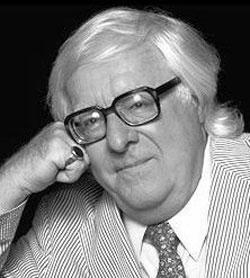
Authors Ray Bradbury and Mary Karr first met on the pages of my Book Lover’s Journal. Of course, I don’t know if this statement is true or not. In reality they may have met at an authors’ awards dinner. Or not. In my reality, they share a back-to-back page, cozying up between the the illustrations, Woodcut from Seikichiro Goto’s Journey of Paper and Gutenberg Taking the First Proof, an engraving published in 1869. I think it is providential that these two authors take up the first two entries in my journal because both (one in writing, one in living) show the profound impact that books have on our lives. Books are a salvation of sorts (and though I don’t mean that in any theological way, I cannot write the statement without acknowledging that it is no accident that Jesus is called the Word Made Flesh). I read these books at a discombobulated time in my life (the boxes have advanced indoors, if you read my last blog) and so reading has been a solace, a salvation.

Here, thanks to the dear friend who gave me my journal for my birthday, I share my entries, and please keep in mind that these are mere entries – the thoughts I scribbled down after I read the books – no in-depth analysis. I’m beginning with Bradbury although I actually read Karr’s book first. As you will read, if the world existed as Bradbury envisioned it, there would have been no Karr.

Fahrenheit 451 by Ray Bradbury
In an interview in the back of the 50th Anniversary Edition which I read, Bradbury states, “The library is our brain. Without the library, you have no civilization.” His book is a tale of a world without libraries, and what happens when books become enemies, when firemen are those who start fires, specifically fires to burn books and those who read them. Guy Montag is one of these firemen, but when he meets his strange 17-year-old neighbor, Clarisse, his life (i.e., view of books and their place in the world) changes. Though taunted by his boss, Fire Chief Beatty, he makes a brave decision with the help of a timid former professor, Faber. Bradbury is all about metaphor. He speaks of this on his website: raybradbury.com, which also includes a lovely tribute to his wife of 56 years. Ironically (or perhaps purposefully) she is the polar opposite of Montag’s wife.
The Liars’ Club by Mary Karr
I discovered this book while reading Margie Haack’s review of another Karr book. “I thought you wouldn’t like me anymore,” Karr’s mother says on page 318 – just three pages from the end of the book. But that statement is really the crux of the entire book and the early life of the author. Karr writes of her family’s life in Texas in crude and graphic, yet very story-friendly and humorous ways. Much of her Texas lingo is familiar to me; e.g., she talks about her mother making “chow-chow.” Her language and her experiences made me wonder what my Texas-born psyche nurse mother-in-law would think about her life. In a couple of places, the book is painfully graphic, and in one particular scene I found myself holding my eight-year-old and thinking how unconscionable it would be to have her experience what Karr did at that age. In summary, this is a gritty but great read and does end with hope. I want to read her other books.

Waiting for the SWAT Team

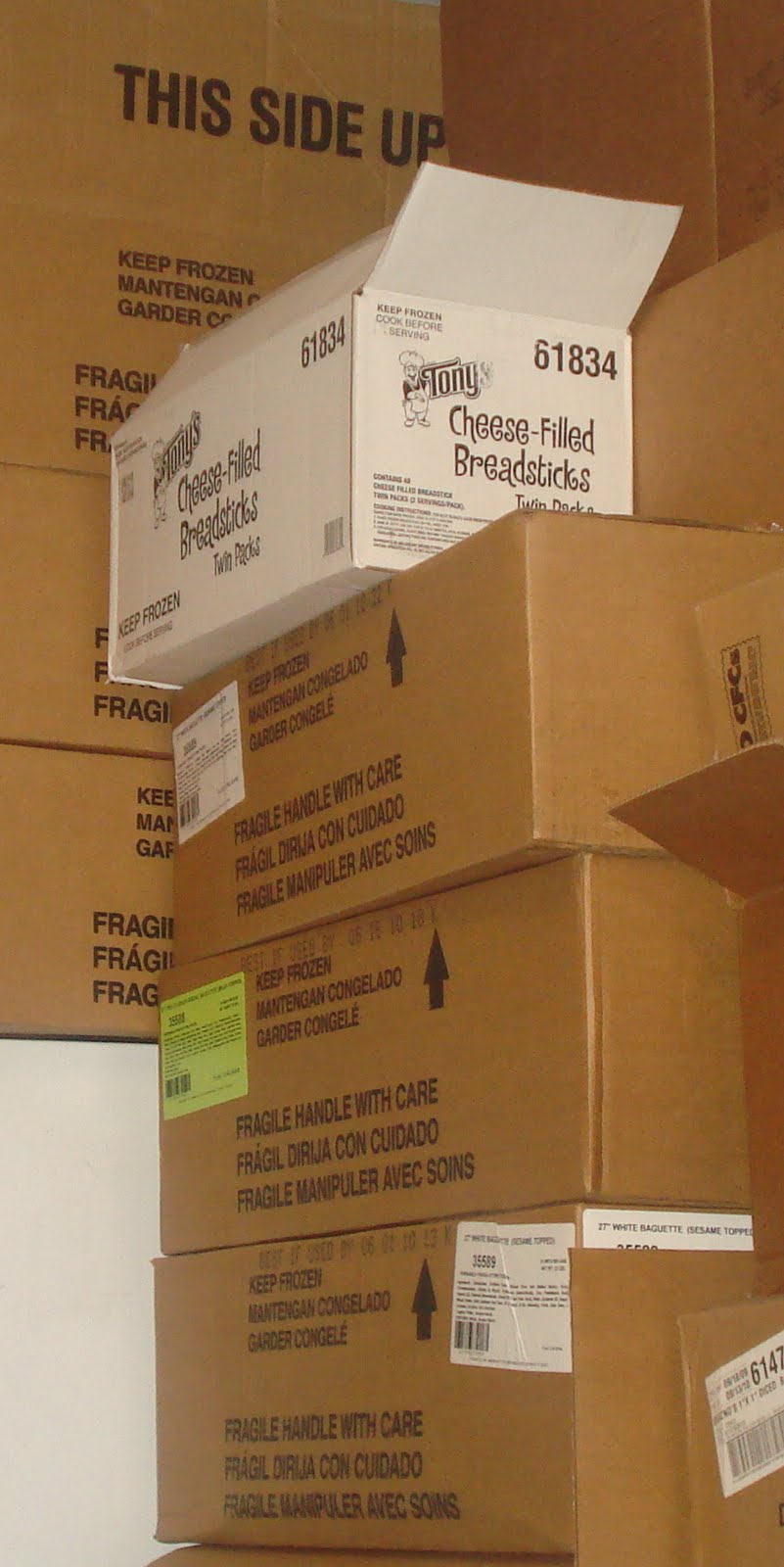
Right now cardboard boxes are piled to the ceiling of my garage. They are a faceless, tan SWAT team mass huddled around the door, waiting for the signal to invade the premises. If only they would swarm in and fill themselves. That would surely enliven the dreaded packing process.

You would think I would be a pro at this. This will be my third move in less than four years, the eighth of my married life, and the twenty-first of my life. We’re not even in the military or witness protection program.

The first big move of my life came when I was seven years old. That was when we moved from The House in Town to The Yaley Place. But prior to that big move came a minor, but even more memorable move. It was a room-to-room move. I know it doesn’t sound like a life-changing event, but it was. It was my first experience witnessing the dynamics of marriage, although at the time I just knew that Daddy and Mama didn’t see eye-to-eye on the event.

I was six when my nineteen year old sister got married (after completing her first year of college as she’d promised our dad). One day sometime after the wedding, my mom moved my older brother into my sister’s old room. I don’t really remember the details; I just remember that my dad wasn’t too happy that my mom took it upon herself to make the said move without consulting him or waiting for his assistance. He came home from work and discovered my mom’s well-intentioned re-arranging. He headed to the bathroom to wash up, my mom trailed him defending her actions, and I trailed my mother, eavesdropping. We wove from room to room like that, a little three-car train: Daddy the disgruntled engine, Mama the quietly defending box car, and me the curious, concerned little caboose. I’ve since learned that Daddy had a reputation for speaking frankly and letting you know where you stood, but before that day I had never sensed even a hint of discontent between him and Mama. I guess I was learning that derailments happen even in homes where things rarely get off track.

And I guess Daddy got over Mama’s rearranging whim. A year later we made that big move to the Yaley Place, and it was a happy, exciting time for us. I’ll try to remember to remind myself that happy, exciting things do come from moves – even as I fantasize about those SWAT team boxes.