Character: Disney to Dylan

I just got off the boat. Literally, a week ago. (You suspected as much, right?) Seriously, this was a Disney cruise ship (a trip courtesy of my husband’s hard work and his employer’s generosity). There were many incredible aspects of this trip and the magical majestic vessel on which we sailed the Caribbean Sea. When it comes to Disney, one thing stands out: attention to detail. I was reminded of my days as a bank trainer, when I proffered Disney as a model company. I remember telling trainees that “one would never see Goofy slouched on a park bench, smoking a cigarette on his break.” The characters on the boat did not disappoint, either.

Whether they were taking their picture with you, or you met them in a hallway being escorted to their next appearance, these characters never cracked. Snow White was unfailingly sugary sweet, soft-spoken and gentle. Even Captain Jack Sparrow never faltered. (Well…he did falter, but not from character!) When my kids went to be photographed with him, he grabbed our camera and started snapping shots of himself, swaying and mumbling the whole time. Very Captain Jack-ish. Of course, this guy wasn’t Johnny Depp, but he looked and played the part beyond convincingly.

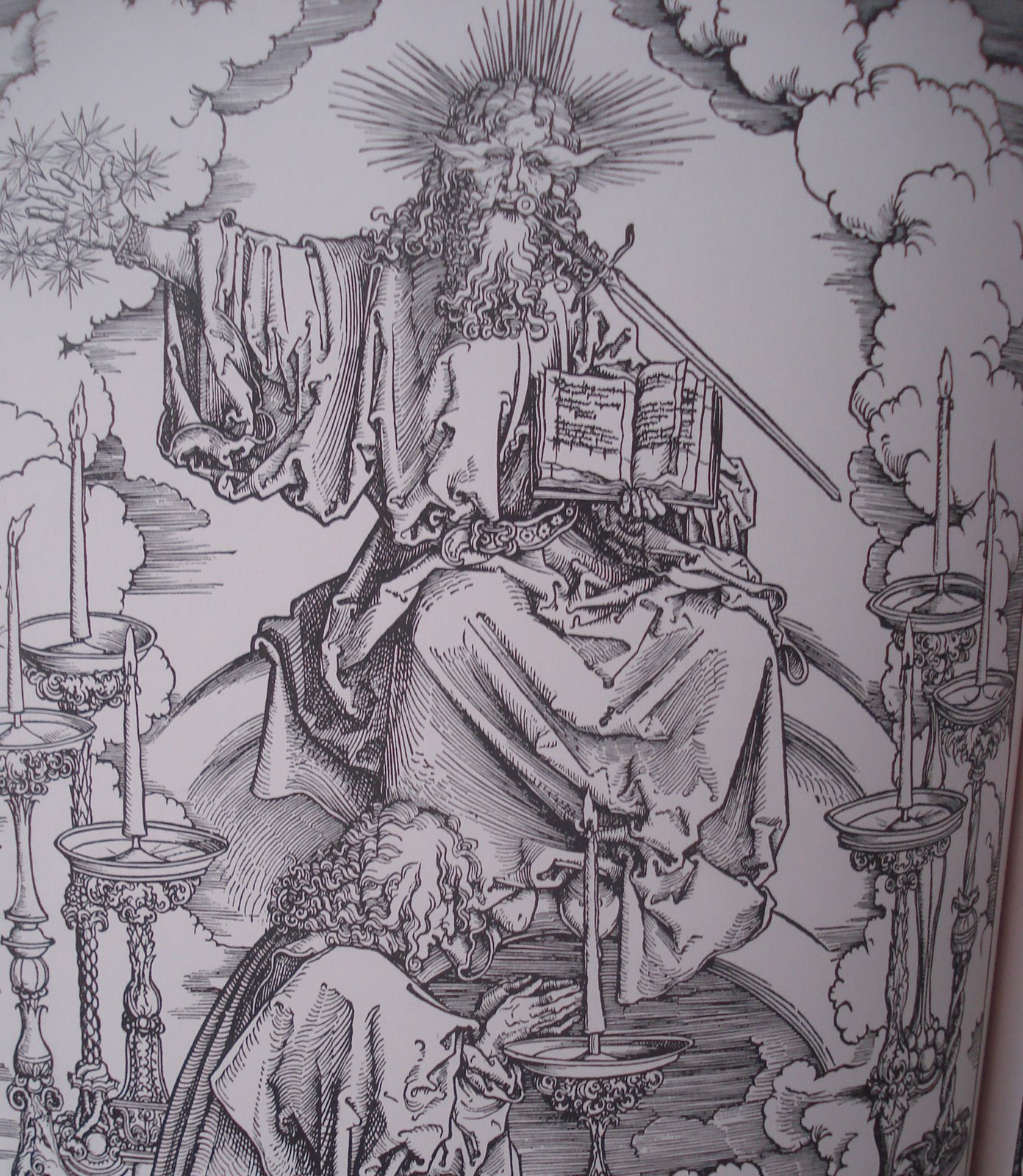
Speaking of “playing a part,” an 80’s CCM song came to mind when I was drafting these thoughts. The chorus went something like…”Oh Lord, dear Lord, great author of the play, May I in wisdom prove the only part that I need play, Is the part that you wrote for me.” I tried to find the complete lyrics on the internet, but couldn’t. Interestingly, I could find the lyrics for every one of the Bob Dylan “gospel rock” songs for which I searched. I’m sure this has something to do with Mr. Dylan’s enduring career, but maybe it also has something to do with the fact this his lyrics seem much more substantial than those of most 80’s Contemporary Christian Music. Let’s face it, “playing a part” for God is a little timid compared to “it might be the devil or it may be the Lord, but you’re gonna have to serve somebody.” (Gotta Serve Somebody from the album Slow Training Coming, 1979)

I hope I haven’t confused anyone by quoting a man whose Christian character has been debated. However, I tend to agree with Scott M. Marshall and Marcia Ford, authors of the book Restless Pilgrim: the Spiritual Journey of Bob Dylan. They make the point that whatever one may say, the fact is, Dylan has never stopped including his gospel songs on his concert play lists. And he’s not exactly the type to sing something he doesn’t believe. That says something about his character, doesn’t it? Marshall and Ford conclude that, “Dylan doesn’t fit any of the religious molds that people have created, simply because Dylan’s personal expression of faith remains larger than any mold mere men ever could create. Meanwhile, as outside observers continue their effort to pigeonhole him, Bob Dylan continues to sit at the feet of the Master on his personal hillside, listening attentively, questioning respectfully, analyzing thoughtfully.” (Page 180)

The “personal hillside” analogy is kind of weird for me, but sitting at the feet of the Master, listening, questioning, and analyzing, do seem like actions that would help us all in our character-building…even more than studying Mickey and friends.


Thinking Green: Wedding Dresses, Etc.

When my son was a teenager he told me he hoped his future wife would wear a green wedding dress. I was horrified. I turned green. I shouldn’t have been surprised, though; green has been his favorite color as long as I can remember. It makes sense that he would envision the love of his life dressed in green on what will hopefully be one of the most beautiful days of his life. I’ve worried that if he persists in this desire, well…you know…will he find anyone to wear that green dress? He assures me that “the right one” will.

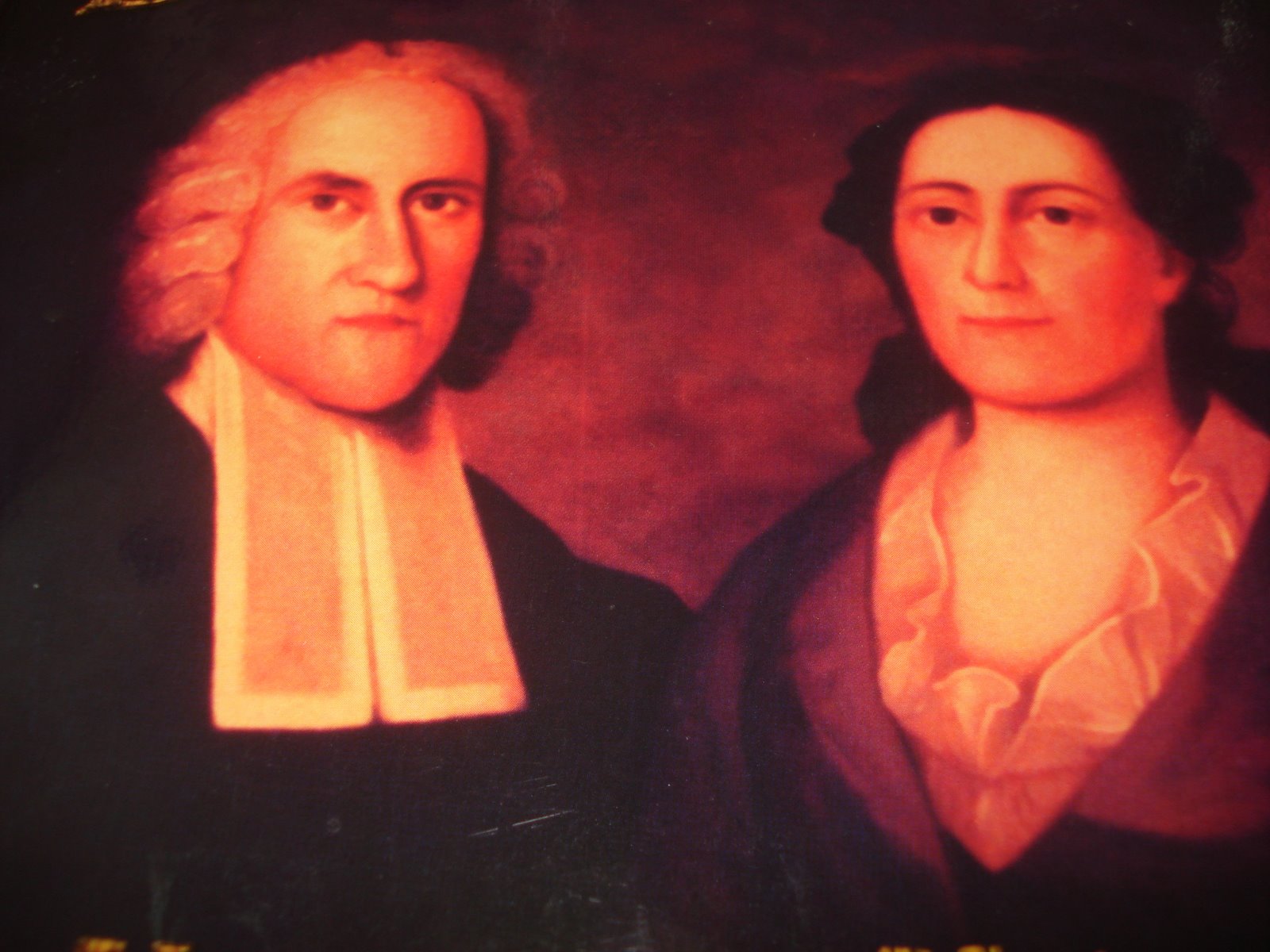
History (other people’s history) proves this to be true. I recently read a book about the marriage of the 18th century theologian, Jonathan Edwards. Here’s the description of his beloved Sarah’s wedding dress: “Her dress was no white wraith mistily drifting toward some vague spiritual experience; she wore a pea-green satin brocade with a bold pattern as she stepped joyfully toward her lover.”*


There is hope for my son! In the meantime, I will enjoy visions of other green things. Like these:

Green Needles

Green Directions

Green Drinks

Green Love

*Marriage to a Difficult Man: The Uncommon Union of Jonathan and Sarah Edwards by Elisabeth D. Dodds

Food for Plot

Some days I feel like I’m living in my own episode of The Next Food Network Star. Only I didn’t sign up. That doesn’t stop my food connoisseur husband from serving as judge, analyst, and commentator for my efforts in the kitchen. Our friends are often amused by our meal-time antics and banter. Twenty-something, Ry, even does a respectable impression of my husband’s drawling critique of one of my chocolate sheet cakes. I’m glad we could supply Ry with some material for his comic routine, and I’m glad he wasn’t around for the first years of my life. He would have starved.

Culinary adventures were not a highlight of my growing up years, but I do have a few distinct memories. There was the time when I requested that my mom make navy beans and cornbread for my ninth birthday party. Smothered with ketchup and dotted with chunks of ham, this school-cafeteria-influenced fare was my favorite meal. I’m sure my guests were impressed.

My guests should have been around a few years later when I was requesting Mom’s Sloppy Joes (a recipe people actually do ask me for today). By that time, however, we were relocated 500 miles away and under the influence of my gourmet stepfather. He would be the first man whose cooking skills would not rub off on me, but I did appreciate his creativity with his leftover plate-sized buttermilk pancakes. We made them into “Wilderness Sandwiches” by spreading them with brown sugar and rolling them around crispy pieces of hickory smoked bacon. These savory/sweet bundles served as meals for autumn expeditions through sumac-lined creek and river valleys. We ate them on winter cross country skiing treks over snow-crusted farmland. They were staples in lunch boxes on spring field trips to outlaw graves, and we stuffed them into tackle boxes for summer evening trips to shady, muggy fishing holes.

In a non-digestible nutshell, Wilderness Sandwiches sustained me for experiences that proved to be intoxicating nourishment for a young woman – experiences that would cause her to hunger after ever more adventures…except for ones on the Food Network. That’s not happening…no matter how helpful her husband’s critiques.

My Home Town

The third track on Bob Dylan’s latest CD, Together Through Life, is “My Wife’s Home Town.” This keenly written, tongue-in-cheek bluesy lament is classic Dylan. I chuckle every time I listen to it (which means I’ve been jovial a lot lately.) In a gravelly voice, sounding distinctly Dylanesque, but also reminiscent of Louis Armstrong, Bob sings about the town from whence his wife hails. It’s a damned good song, and my language here is intentional. Every wife should listen to the song and wonder if her husband can relate. I’m sure mine can sometimes.

I wouldn’t really want to be from Bob’s wife’s home town. I would like to at least have one. Ever since I (for better or for worse) signed up for a Facebook account, I’ve felt pressure to claim one. So confused was I about the true definition of a home town, I had to look it up in Webster’s. (This is a bunny trail, but I thought you might find it interesting. I did.) Noah Webster’s 1828 dictionary does not have a definition for home town; however, he lists one for homestead, “the [inclosure] or ground immediately connected with the mansion.” Funny. I don’t normally think of homesteads having mansions. But I like that this is kind of a history-in-a-nutshell definition. Anyway…my 2008 Eleventh Edition, Merriam-Webster’s Collegiate Edition, defines home town as “the city or town where one was born or grew up; also: the place of one’s principal residence.” This only complicates things. Do I put where I was born, where I grew up, or my principal residence?

The town where I was literally born is 7.3 miles from the town where I actually lived for the first nine years of my life. Most of the friends and relatives, who shared this rural Oklahoma address, have either moved away or died. No one would probably care one way or another if I claimed that town as my home town. Maybe I will put that.

More people would likely remember me from the Nebraska town where I lived for the second nine years of my life, even though I left after high school graduation, came back once when I was still going to college in the state, and then came back two more times for friends’ weddings. Shouldn’t a person at least visit her home town more than three times in 26 years?

I’ve lived in four towns/cities since high school. In some ways I’ve probably done more “growing up” in these than in the first two. I’ve made really wonderful friends in all these towns. That makes me wonder. Before I read the “real” definition of home town, I had the romantic notion that it would be defined as something more like the place in the Cheers theme song, “…where everybody knows your name – and they’re always glad you came.” Could I get away with just putting “Friends” as my home town? Maybe in the end, I’m just what a couple of book writers described Dylan as – a “Restless Pilgrim.”

Being Judgmental

The other day a friend and I were discussing the pros and cons of a particular lifestyle found in segments of certain societal groups. It’s more common, though not usually prevalent, in some church circles. My friend thinks that we might learn a lot from people who have chosen this lifestyle, because they seem to do some things very well. She thinks we ought to try to engage them in conversation whenever possible.

The problem is that people in these groups sometimes exude an air of judgmental-ism which makes approaching them, let alone engaging them, a difficult endeavor. This would be a good time to note that my friend is no wimp. She’s very smart and sincere and desires to do right by God and man. I think people in any group could learn a lot from her. Also, she has really friendly kids, and I tend to judge people based on the friendliness of their children.

Yes, I did say I judged people, and yes, I do see the hypocrisy. I really need to work on this. Maybe if I work through my judgmental attitude, work on taking the log out of my own eye, it will help me understand the “judgmental” attitude I think I see in others.

Here goes…When I’m around children (ages two or twenty, it matters not) who seem happy when I speak to them, or happy to take the initiative to speak to me themselves, I’m comforted. I am somehow assured that, whether through direct instruction or by indirect example, they’ve learned that other lives have value. They honor that value with a smile or a kind greeting or conversation. I believe other lives have value because they were created in the image of God, and therefore, no matter how people look or smell or wear their jeans, they deserve to be acknowledged – even by children. (Of course, I’m not talking about “talking to strangers” here.) Anyway, if even children understand this concept, albeit in very elementary ways, it’s a pretty safe bet that they learned it from their parents. I appreciate people like that. I see it as a good thing, and I humbly propose that my judgments on the topic of friendly children and my looking for this “good” in others, have merit. BUT (a very BIG BUT!) I must admit that the presence or absence of this quality in others might not really give me the whole picture of whether or not they value life. So…this self-evaluation has been a helpful process. I will, by the grace of God, change my attitude. Especially, now that you all know my weakness and can hold me accountable. And there’s the difference.

The difference in my judgmental-ism and that of the other group is that you might not have guessed my attitude if I hadn’t confessed it. There is also a difference between “being judgmental” and making honest judgments. I feel judged by the other group precisely because of their outward words and actions. Still, I need to give them the benefit of the doubt. Are they truly being judgmental or am I just sensitive to their honest judgments? After all, I’ve already admitted that at least some of their judgments probably have merit, too. At the very least I need to make some effort to find out. I hope I’m around when my friend decides to engage those people. Rather, I need to engage them myself.

Under My Umbrella

If you read my last blog entry, you know that I’ve been trying to “lie fallow,” to rest up, rejuvenate myself after a grueling school year. My time “under my umbrella” has certainly not been anything like the scene under Rihanna’s umbrella, although I feel compelled to mention hers because it seems to be slightly more in the forefront of the public conscience. The point I want to make is that the scene under my humble, not-so-famous backyard umbrella has not been the scene I expected.

I thought if I spent more time under my umbrella thinking and observing, I would have more things to say. (I’ve found this is important as a blogger.) It didn’t work out that way. Not that it can’t work out that way. I think many people find inspiration in solitude. They steal away to rustic cabins in forests primeval and the icy air clears their minds and souls. They receive revelations under softly falling snow and moonlit mountains. Evidently, I’m not that kind of person.

I’m the kind of person who is guilty of tossing around the phrase, “God meets you where you are,” like I’m in a spiritual game of Toss Across. If I can just get my beanbag to hit the right X, I’ll be the winner. I think I have to hit the right X and get in the right position to be where God will meet me. That kind of game is anything but “God Meets You Where You Are.”

Instead, God meets me where I am when I’m not even thinking about exactly where that is. It’s like this: I was sitting under my umbrella, pen in hand, waiting for God to show me something I was supposed to be learning or appreciating or doing. But God had really planned on meeting me over the beans on the stove. Or while I was checking the thermometer in my kid’s mouth. Or while I was folding the fifth basket of laundry for the day. After all, THOSE are the places He has been putting me lately – not on a lonely mountainside.

I’m not going to abandon my umbrella. I’m just not going to expect as much from it. And I may even listen to more of Rihanna’s “Umbrella.” If I’ve learned anything, it’s that you can’t underestimate from what you might learn something.

I Feel Like Dirt

I feel like dirt. Normally, when a person says that, he or she is feeling walked on, abused. That’s not what I mean. To the contrary, I almost feel egotistical making such a declaration. I can’t help but recall with humility the Old Testament story of Uzzah, a man who learned a fatal lesson about the holiness of God…and the purity of dirt. However, it is my agrarian roots that first taught me the value of dirt. I’m pretty sure it wasn’t a farmer who coined the phrase, “dirt cheap.” Dirt, being an incubator for life, has value. The life that springs from it in growing seasons might get all the attention, but that life wouldn’t exist without a fertile clod into which it can sink its roots.

The school year is my growing season. I usually think of myself as the farmer during this season, tending my little crops of children and students. But right now I am feeling tilled by the plow of productivity and purpose. Heavy blades sank deep, cutting and churning to prepare me for seeds whose identities often remained secret to me for months. Miraculously, I brought forth fruit at times, but often I nurtured weeds, and I had to endure the sickle repeatedly.

Nashville songwriter and blues/rock artist Mark Selby, a man who hails from the farmlands of Oklahoma and Kansas, titled his second solo album, “Dirt.” Today I realize what an ingenious tribute it is. Between a gold record and a dirt record, I wonder if Mark might choose to win dirt.

This pile of dirt isn’t up to competing with gold. I need to lie fallow for awhile. Rest. Soak up the sunshine of scant schedules and the rain of recreation. My matriarchal muse, Planting Season, smiles from the horizon.

Looking for MR. Butterworth

This morning I took a trip to Waffle Land. This is what happens and where you find yourself when your kids’ imaginations run wild at the breakfast table. Perhaps you have been to Waffle Land, but this was my first trip there. I was unfamiliar with the surroundings and the inhabitants, or, as my daughter informed me, the lack of inhabitants – specifically, one particular inhabitant. You see, Waffle Land is in need of a MR. Butterworth. Presently, Mrs. Butterworth resides there in a Log Cabin – all alone. She longs to fill the Log Cabin with little Butterworths, but alas, there is no Mr. Butterworth! As delicious and wonderful as it may appear, Waffle Land is strange and…incomplete.

Perhaps stranger even than Waffle Land is how this idea of a strange land coincided with something I had read a few hours before this little trip. “How shall we sing the LORD’S song in a strange land?” (Psalm 137:4) Is there any congruity between singing the LORD’S song in a strange land and visiting Waffle Land? I think so.

Waffle Land, because it was spoken into being by my children, became part of my real world, a world with imaginative children, waffles, dishes, laundry, cacti, coffee, friends, neighbors, God. This is my world, but it is not everone’s world. Author Eugene Peterson, in his book Tell It Slant, asks, “How do we talk about God as we are rubbing shoulders on a daily basis with men and women who practice a way of life that takes for granted a quite different set of ways and means for becoming whole, complete, our true selves, than we do?” (page 145) In my own words: how do I live out my faith in this real world in such a real way that those around me, who may think they’re looking for Mr. Butterworth, come to see that perhaps they’re really looking for Christ? And how do I do this so it sounds like singing, not fingernails on a chalkboard?

While singing my song in this strange land, I must remember that whatever part God has given me, it is ultimately His plan that counts. And His plan includes adoption. “How blessed is God! And what a blessing he is! He’s the Father of our Master, Jesus Christ, and takes us to the high places of blessing in him. Long before he laid down earth’s foundations, he had us in mind, had settled on us as the focus of his love, to be made whole and holy by his love. Long, long ago he decided to adopt us into his family through Jesus Christ. (What pleasure he took in planning this!) He wanted us to enter into the celebration of his lavish gift-giving by the hand of his beloved Son.” (Ephesians 1:3-6, The Message)

Perhaps Mrs. Butterworth will eventually consider adoption, too.

No Dripping

Last Friday I woke up to the “perfect morning” – quiet, cool, overcast and drizzly. I had an hour before my walking buddy would arrive so I decided to sit on the front porch and read and, of course, enjoy the great weather. I grabbed my new copy of Blue Like Jazz, a book I’ve read before but wanted to reread. It seemed like the perfect book to read in the rain, too, because it’s author, Donald Miller, and I share that mystical experience of transformation that comes from living in Oregon. Reading Donald Miller in the rain is like stirring real cream into your coffee – it becomes richer, smoother and tastier. Except…

Except when I tried to read a couple of things ruined the mood for me. First, there was a steady drip from the gutter, hitting this annoyingly-placed plastic drip system cap. It only took half a minute of this before Proverbs 19:13 came to mind. “The contentions of a wife are a constant dripping.” Drip-drip-drip-drip! Nip-nip-nip-nip! Yap-yap-yap-yap! OK! I get it!!

The second thing that kept me from enjoying a good read in good weather was my own dripping thoughts. I was complaining inwardly that this beautiful weather wouldn’t last very long…not days or weeks or months like it would have on Gilesford Street. This was, afterall, Arizona.

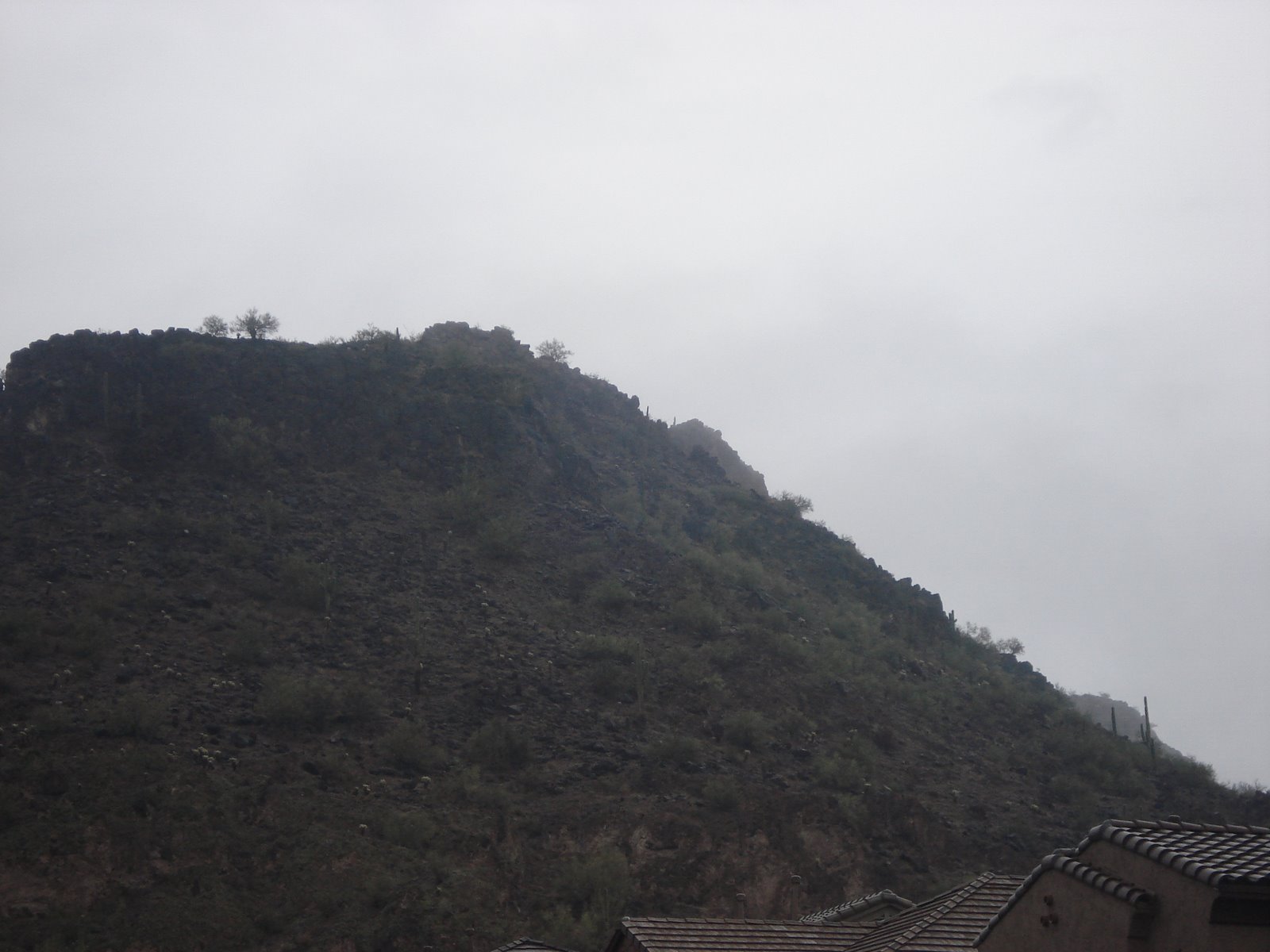
Who knows how long I would have waded in this puddle of pity? Thankfully, I happened to glance up to the cactus-covered hill across the street. It was then that Creation taught me (another) lesson.

It’s a lesson my mom (and probably a few teachers) also taught me. It’s about posture. Slouching, like dripping, conveys a negative message. There, in the rain, the cacti were standing straight and tall with their arms stretched upward as if thanking God for this rare liquid treat. That wasn’t the lesson, though. The lesson was in realizing that cacti have the exact same posture in the blazing sunshine.

So, cacti seem to know something about contentment. I wondered if this would be true about Creation’s specimens in opposite climates…say, where there’s more rain than sunshine. What about those fir trees in Oregon? Yes, their posture, too, is commendable. They stand tall and erect, their arms stretched out and even a little downward in a dignified humbleness. Their service to their Creator is to shed the nourishing, wet blessing upon other life. When the sun does come out, they don’t shrink and shrivel. There they stand, still dignified and humble, their impressive evergreen-ness all the more stunning in the sunshine.

By the time I figured out this lesson in contentment, my walking partner had arrived and Donald was still a boy in Houston. I can’t help but believe, however, that he might approvingly raise a cup of Burnside coffee to a lady who learned a lesson from cacti and firs.

Hearing Voices

The persistent, lonely cooing of the mourning dove is one of my favorite sounds. Another sound I love is deep “rolling-bowling balls-across-the-sky” thunder. My day began with hearing the former and is ending with hearing the latter. I don’t hear these sounds every day, so when they do break through the static soundtrack of my daily life, I listen as raptly as if they were a new U2 or Bob Dylan song. Mourning dove calls and thunder aren’t mere sounds, they are voices – just like Bono’s and Bob’s.

I’m not the only one who hears these voices. The writer of Psalm 77 said to God, “The voice of your thunder was in the whirlwind.” (v.18) The prophet Isaiah, in writing about the sad separation between God and Israel, said, “We all growl like bears, and moan sadly like doves.” (Isaiah 59:11)
I heard another voice today – the miserable cry of a cat in heat. The yearning eeriness of her moaning was unnerving. It is a voice I do not like, and it strikes me that it might very well be like the groaning complaining of my voice before God at times.
Our ears were made to hear voices. In doves and thunder and cats, I can only guess at what is being said. Voices (whether human or not) get my attention, but ultimately I need more than voices. I need words. Is it any wonder that Salvation was sent to mankind in the form of “Logos,” the Word? (John 1:1) Blaise Pascal gave us the idea of a “God-shaped” hole in the human heart when he wrote about an “infinite abyss” that could only be filled with “an infinite and immutable object.” I cannot imagine thinking as deeply as Pascal, but in my own humble understanding, I believe that there is also a blank line within the human ear waiting to be filled in with the Word.”